
Land Rover Defender Restoration Process
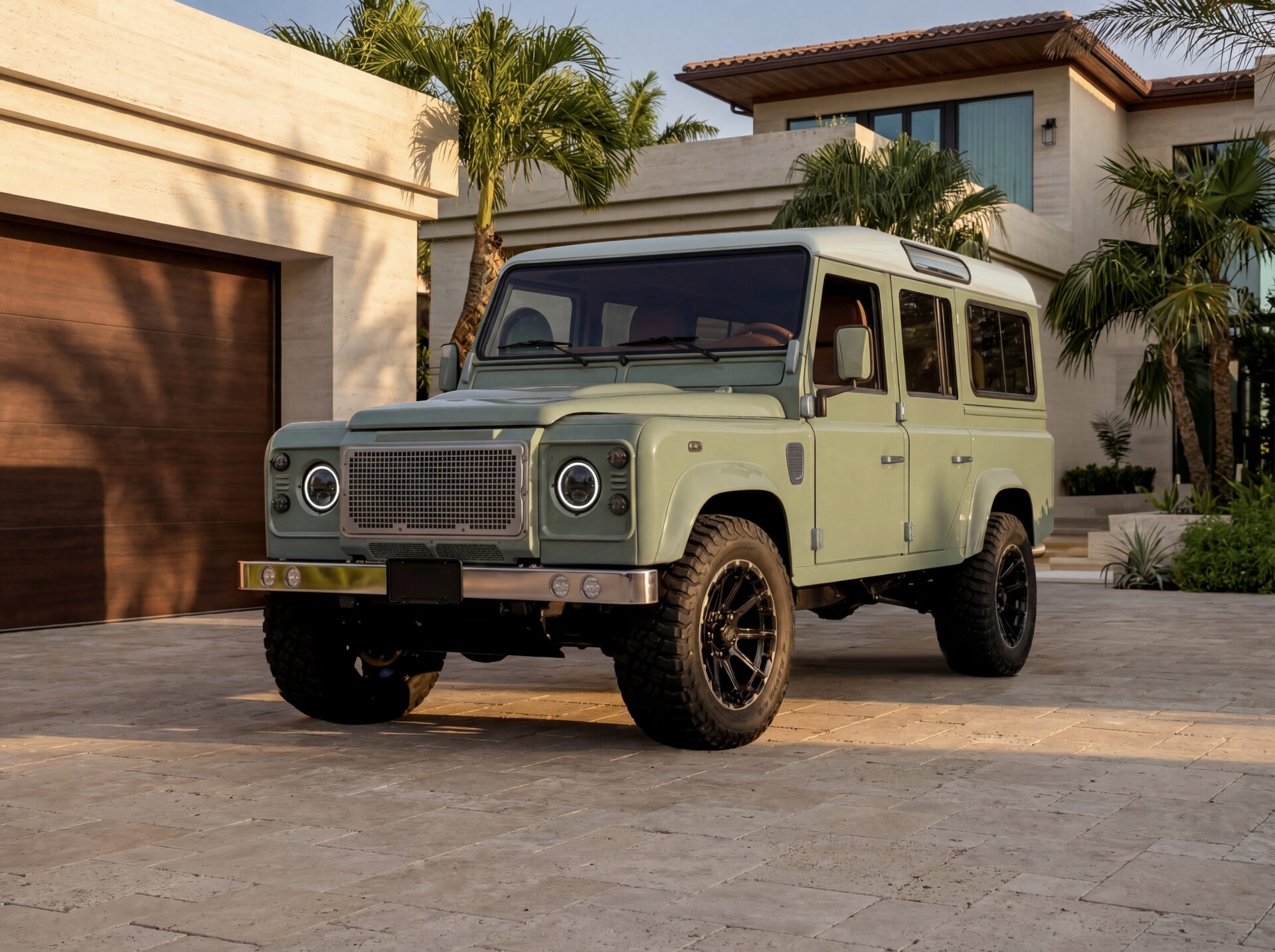
Every Phoenix Restorations Land Rover build follows a carefully structured restoration process designed to create a Land Rover Series or a Land Rover Defender that is reliable, durable, and built to last for generations. More than just a vehicle, we believe a classic Defender should become a trusted companion. One that carries memories, adventures, and stories for years to come. In an age where most vehicles feel disposable and disconnected, a restored Defender offers a sense of character, authenticity, and permanence that is increasingly difficult to find. Our mission is to preserve that experience while delivering exceptional craftsmanship and value to every owner.
What makes A Phoenix restoration different?
Genuine Nut and Bolt Restoration
Every Phoenix Restorations build begins with a genuine Land Rover Defender donor vehicle and undergoes a complete nut-and-bolt restoration. Each vehicle is stripped down to its bare chassis, allowing every major component to be inspected, restored, rebuilt, or replaced as required. Every fastener throughout the vehicle is renewed, while original Defender hardware is refinished and zinc-coated where appropriate to ensure durability and corrosion resistance.
Galvanized Chassis
Our chassis restoration process is designed to maximize longevity. Each chassis is sandblasted to remove rust and contaminants, acid-treated to eliminate blasting residue, and then hot-dip galvanized to provide exceptional protection against corrosion. The result is a foundation built to withstand decades of use in a variety of climates and conditions.
Unlike many restoration companies that rely on converted platforms, all of our projects begin with genuine Land Rover Defender donor vehicles featuring matching original chassis and engine configurations. We do not build on Santana platforms or Defender replicas.
Complete Engine Rebuilds
Mechanically, every vehicle undergoes a comprehensive rebuild. Original engines are completely disassembled, inspected, machined, and rebuilt to factory specifications or beyond. Cylinder heads are reconditioned, cylinders are measured and honed, oil pressure and compression are verified, and performance upgrades such as improved turbochargers, fuel injection components, carburetion systems, and oil pressure regulation systems may be incorporated where appropriate.
Renewed Suspension & Brakes
The suspension, steering, braking, and drivetrain systems are also extensively renewed. Springs, shock absorbers, brake calipers, brake discs, hydraulic lines, steering components, and differential assemblies are inspected and rebuilt or replaced to ensure dependable performance both on and off the road.
Modern Comfort Upgrades
To complement the vehicle’s classic character, we integrate carefully selected modern conveniences, including air conditioning, power windows, Apple CarPlay, reverse cameras, front-view cameras, premium audio systems, and other upgrades that enhance everyday usability without compromising the Defender’s heritage.
Today, Phoenix Restorations proudly serves enthusiasts worldwide, delivering restored Land Rover Defenders that combine authentic character, exceptional craftsmanship, and outstanding value.
Unlike cosmetic restorations that focus primarily on appearance, our process addresses the chassis, bulkhead, drivetrain, suspension, electrical systems, and interior—creating a vehicle that is engineered to be driven, enjoyed, and passed down for generations.
Learn more about the factors that influence a Defender restoration cost.
The 5 Stages of our restoration process
Stage 1: Donor Vehicle Selection, Design & Project Planning
Introduction
Every Phoenix Restorations’ Land Rover Defender Restoration Process begins in one of two ways: either as a pre-configured vehicle built to our own specification, or as a fully bespoke restoration commissioned by a client. While the final vision may differ, our donor selection standards remain the same for every build. Explore our guide to choosing the right Defender engine.
Donor Vehicle Selection
When sourcing a donor vehicle, we focus on two key criteria: the condition of the chassis and the condition of the engine. We are not searching for a pristine vehicle, as every project undergoes a complete restoration regardless of its cosmetic condition. However, we do look for a structurally sound chassis that has not suffered major accident damage or advanced internal corrosion. Surface rust is acceptable, but structural integrity is essential.
The second requirement is a running engine. Since every powertrain is fully rebuilt during the restoration process, outright performance is not a deciding factor. What we want to see is an engine that starts, runs, and provides a solid foundation for the mechanical overhaul that follows.
Evaluating What Can Be Saved
Once the donor vehicle has been acquired, we conduct a detailed assessment to determine which components can be restored and which are best replaced. This includes evaluating the body panels, drivetrain, steering system, suspension components, and transmission. At this stage, we also determine whether the project will retain its original mechanical configuration or incorporate upgrades such as an automatic transmission, revised steering system, or alternative powertrain.
Defining The Vision
With the technical foundation established, attention turns to the vision for the finished vehicle. Some clients are seeking a traditional Heritage-inspired Defender, while others prefer a more modern interpretation with upgraded comfort, styling, and performance. Body style decisions are finalized during this stage, including soft-top, cabriolet, Defender 90, Defender 110, pickup, or hard-top configurations.
The design phase then begins. Together with the client, we define the exterior styling, body kit selection, paint colors, upholstery materials, leather and Alcantara combinations, wheel and tire packages, roof racks, lighting packages, and other bespoke details that will shape the vehicle’s final character.
This phase typically takes between two and three weeks. Donor vehicle sourcing and acquisition generally requires approximately two weeks following the signing of a restoration agreement. The overall timeline largely depends on how quickly the final design direction is approved. For clients who already have a clear vision, this stage can move very quickly. For those who are still exploring options, our team provides guidance, recommendations, and material samples to help bring the project into focus.
Deliverables During Phase 1
✓ Donor vehicle selected and acquired
✓ Project consultation completed
✓ Design direction approved
✓ Paint color selection finalized
✓ Leather and Alcantara materials approved
✓ Wheel and tire package selected
✓ Optional accessories specified
✓ Final project specification signed off
Stage 2: Stripping Back to the Foundation
Complete Vehicle Disassembly
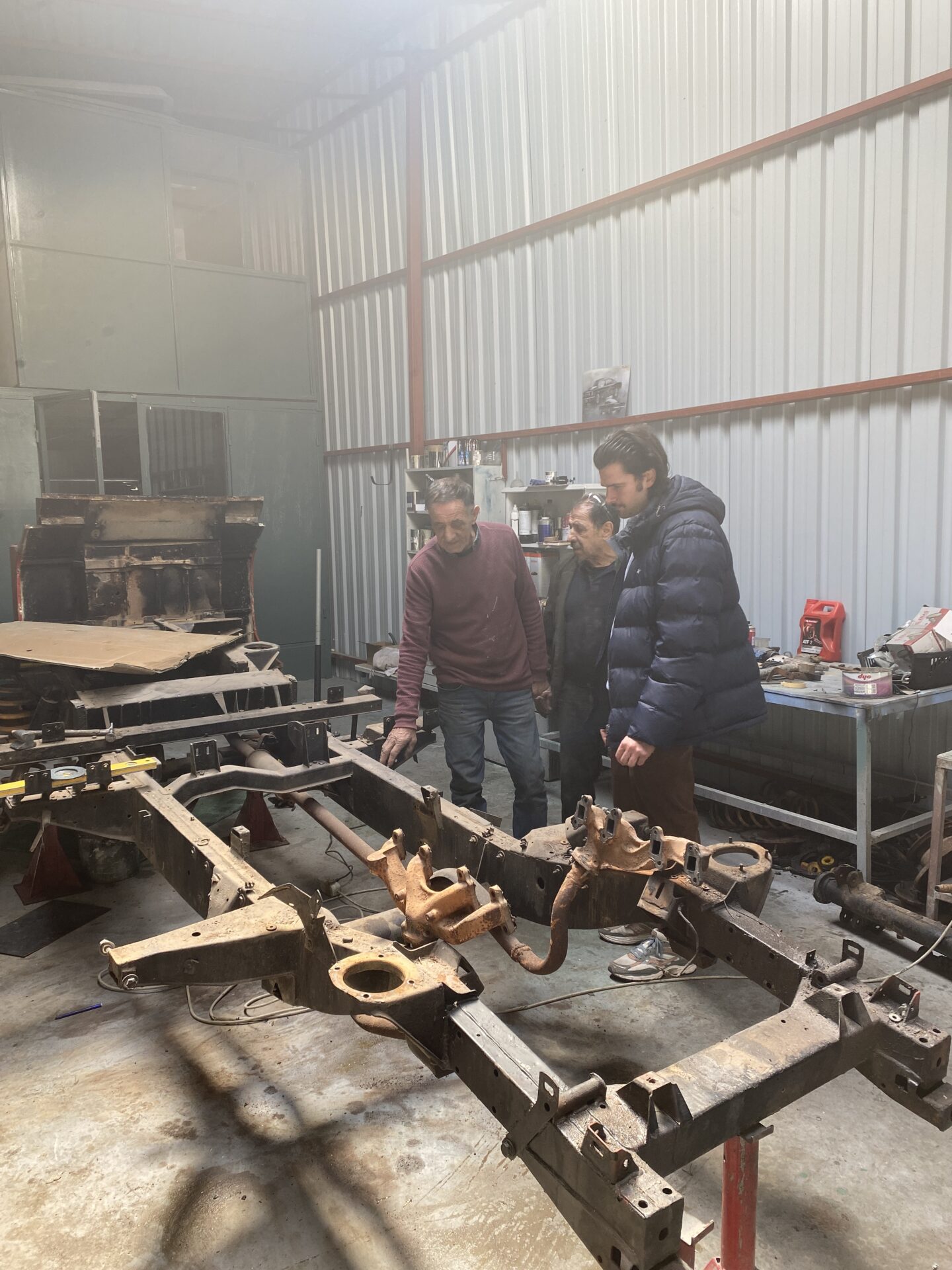
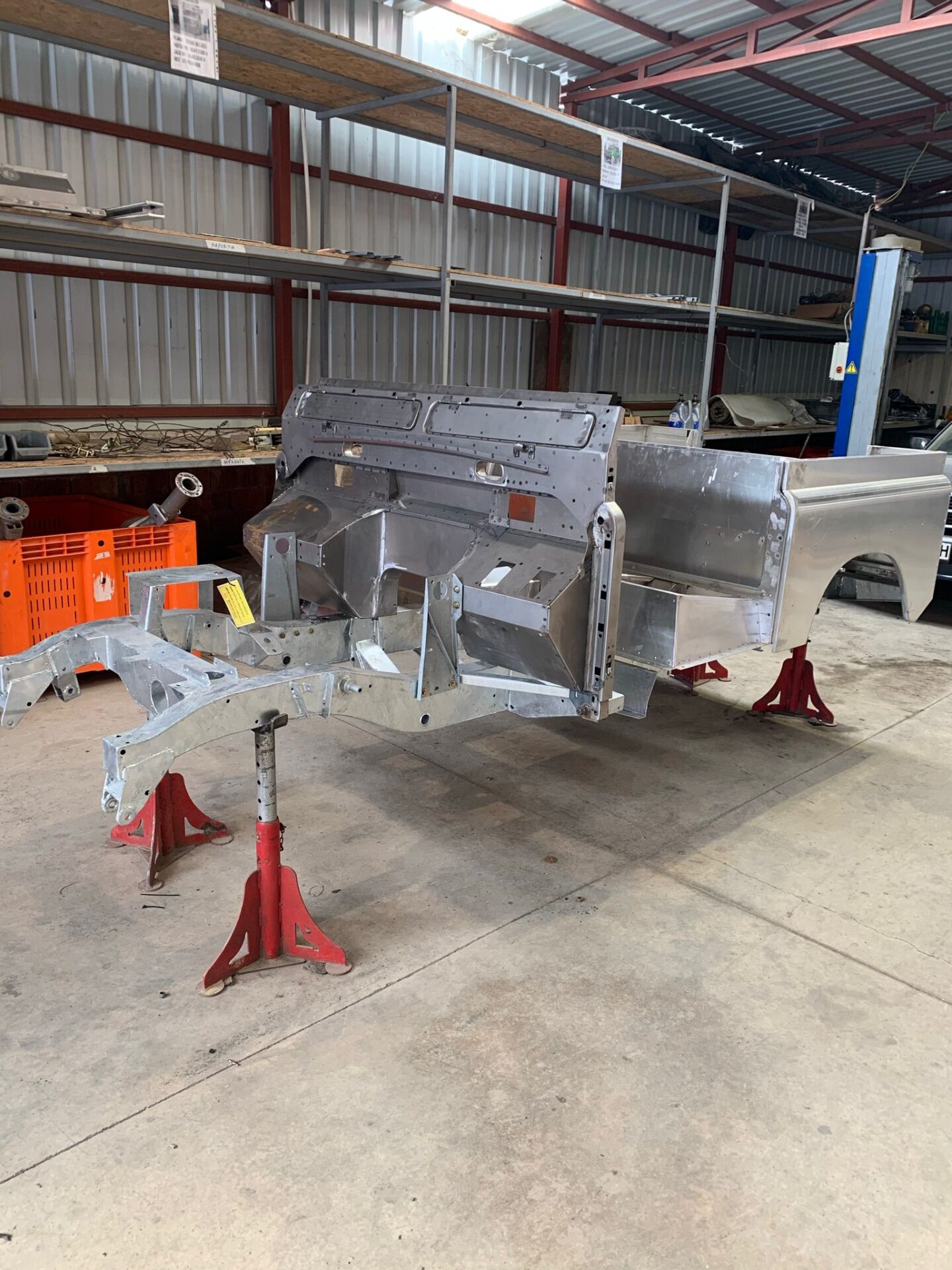
Once the donor vehicle arrives at our facility, the Land Rover Defender Restoration process begins with a complete disassembly. Every major component is removed from the vehicle, separating the body from the chassis and allowing each system to be individually inspected and restored.
The aluminum body panels, steel structural components, doors, roof, bulkhead, corner cappings, rear crossmember, floor panels, and other assemblies are carefully removed until only the bare chassis remains. This process allows us to accurately assess the true condition of the vehicle and identify any hidden corrosion or structural issues that may not be visible while the vehicle is assembled.
Chassis Inspection & Structural Repairs
With the chassis fully exposed, our team performs a detailed inspection to identify corrosion, wear, fatigue, and any structural damage. Areas affected by rust or deterioration are professionally repaired and reinforced where necessary.
Our goal is not to hide imperfections but to permanently address them before the restoration moves forward. Any repairs required to restore the chassis to our standards are completed at this stage.
Sandblasting & Surface Preparation
Once all structural repairs have been completed, the chassis undergoes sandblasting. This process uses high-pressure abrasive media to remove rust, paint, contaminants, and decades of accumulated surface corrosion.
Quality control is a critical part of this stage. If our inspection team is not fully satisfied with the result, the chassis is returned for additional blasting until every area meets our standards.
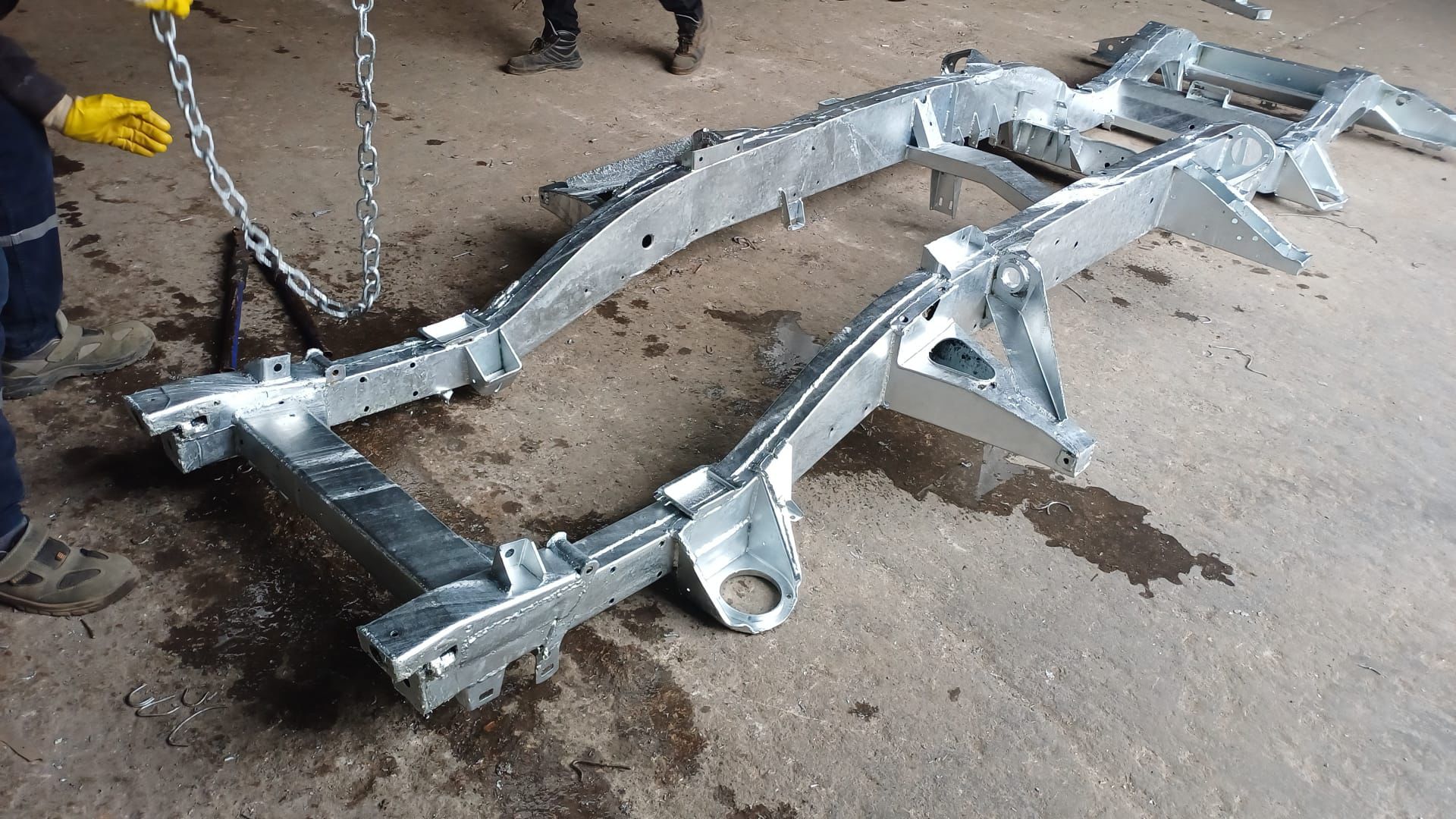
Acid Treatment & Hot-Dip Galvanization
After sandblasting, the chassis is acid-treated to remove any remaining contaminants and ensure the surface is completely clean prior to galvanization. This process also helps eliminate any residual blasting media that may be trapped inside the chassis rails.
The chassis is then sent for hot-dip galvanization. During this process, the entire chassis is submerged in molten zinc at temperatures approaching 450°C (842°F). The zinc bonds to the steel, creating a highly durable protective layer that dramatically improves corrosion resistance.
This is one of the most important steps in the restoration process and forms the foundation of a vehicle that can be enjoyed for decades to come.
New Body Structure Preparation
While the chassis is undergoing restoration, work begins on the vehicle’s body structure. Rather than reusing heavily corroded steel components, we typically replace major structural body elements with new parts.
This often includes a new bulkhead, doors, roof assembly, rear tub structure, floor panels, corner cappings, window frames, and other steel body components as required by the project.
Before assembly begins, all steel components are prepared and treated with multiple coats of epoxy primer to provide long-term protection against corrosion.
Body Assembly Preparation
Once the structural components have been prepared, the aluminum exterior panels are carefully fitted and aligned with the underlying steel framework. This stage lays the groundwork for the body restoration, paint preparation, and final assembly phases that follow.
Deliverables During Phase 2
✓ Complete vehicle disassembly completed
✓ Chassis inspection and assessment completed
✓ Structural repairs completed
✓ Chassis sandblasting completed
✓ Acid treatment completed
✓ Hot-dip galvanization completed
✓ New body structure sourced and prepared
✓ Epoxy primer protection applied
STAGE 3 : MECHANICAL REBUILD, FINAL ASSEMBLY & ROAD TESTING
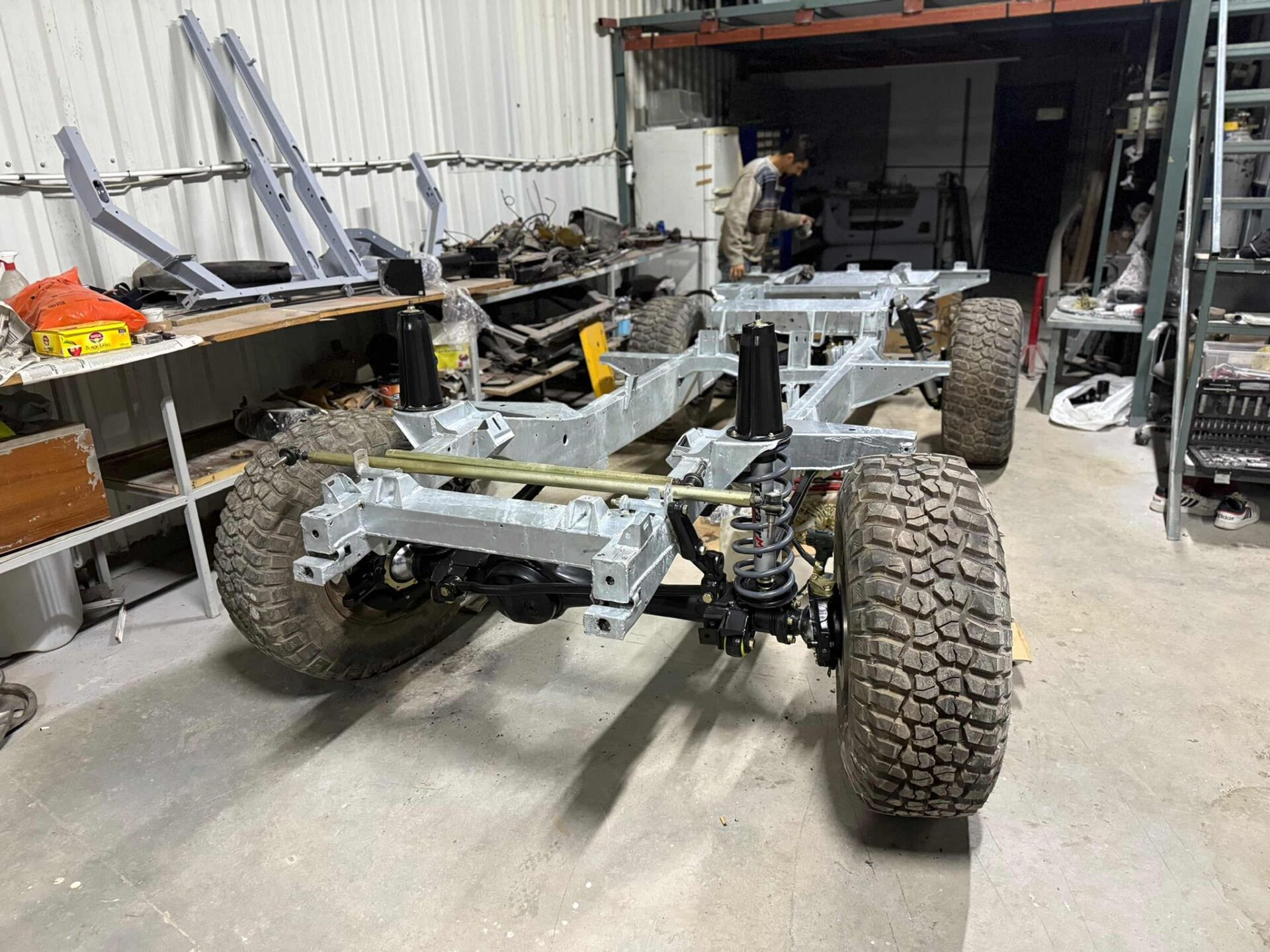
Axles, Suspension & Steering Systems
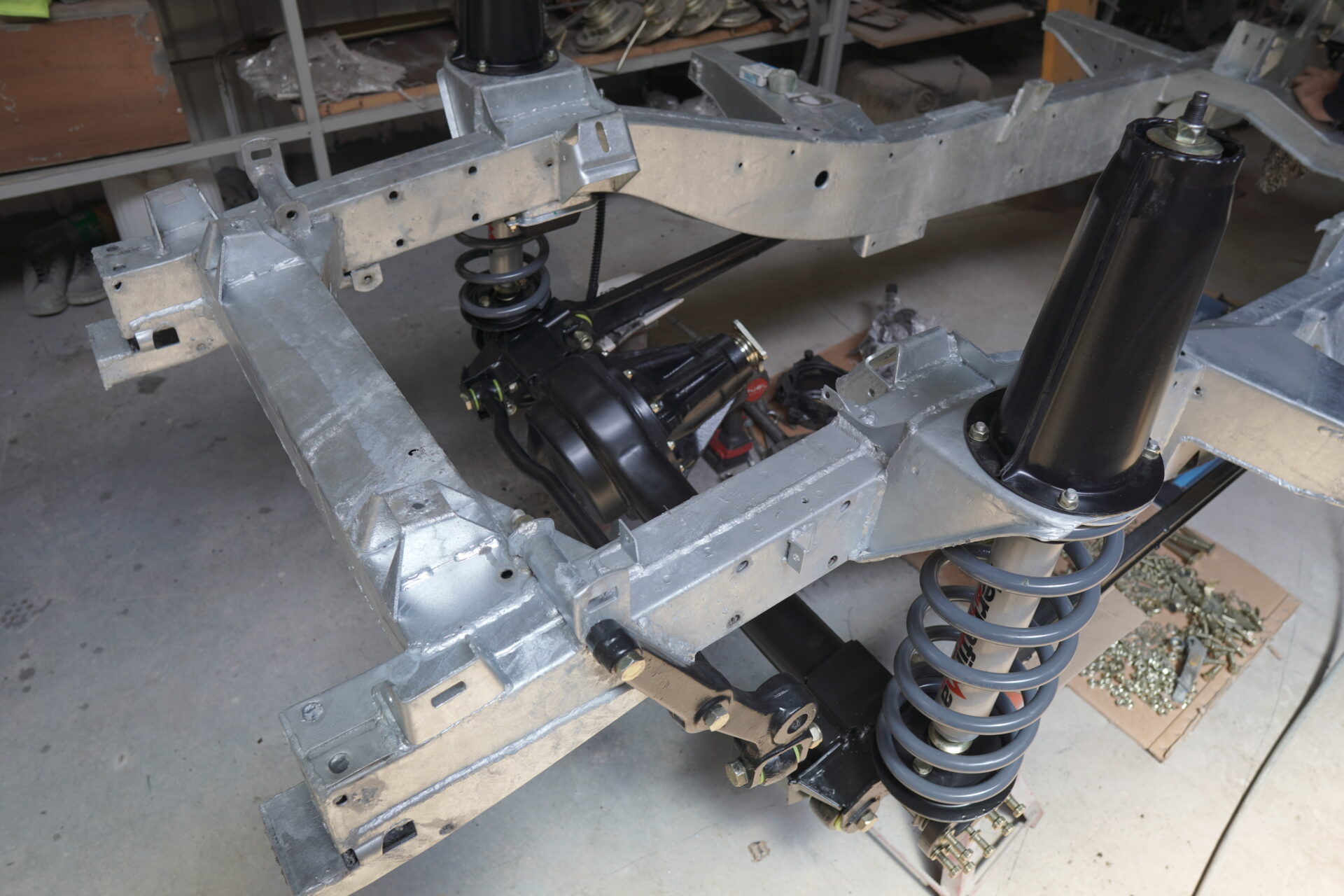
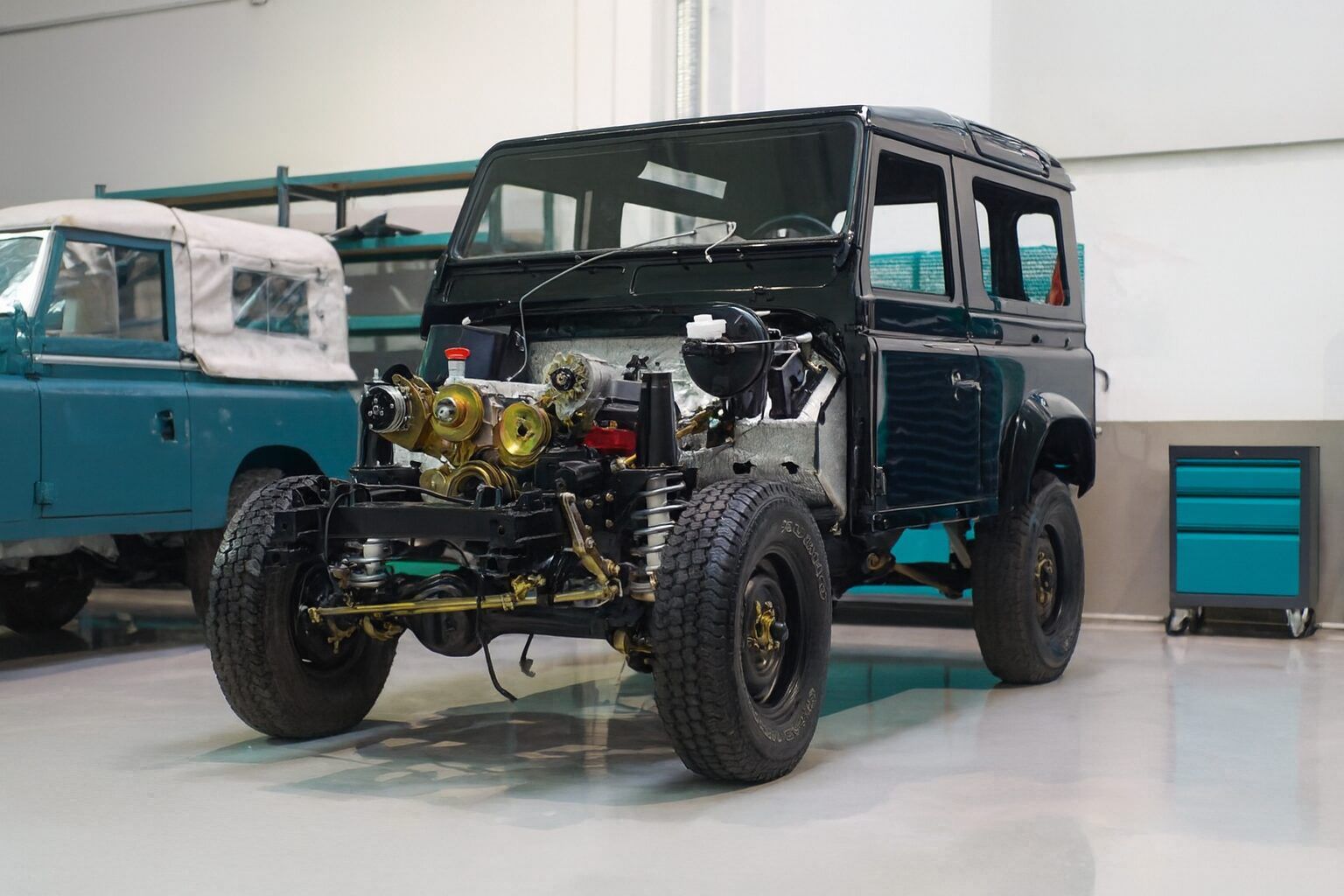
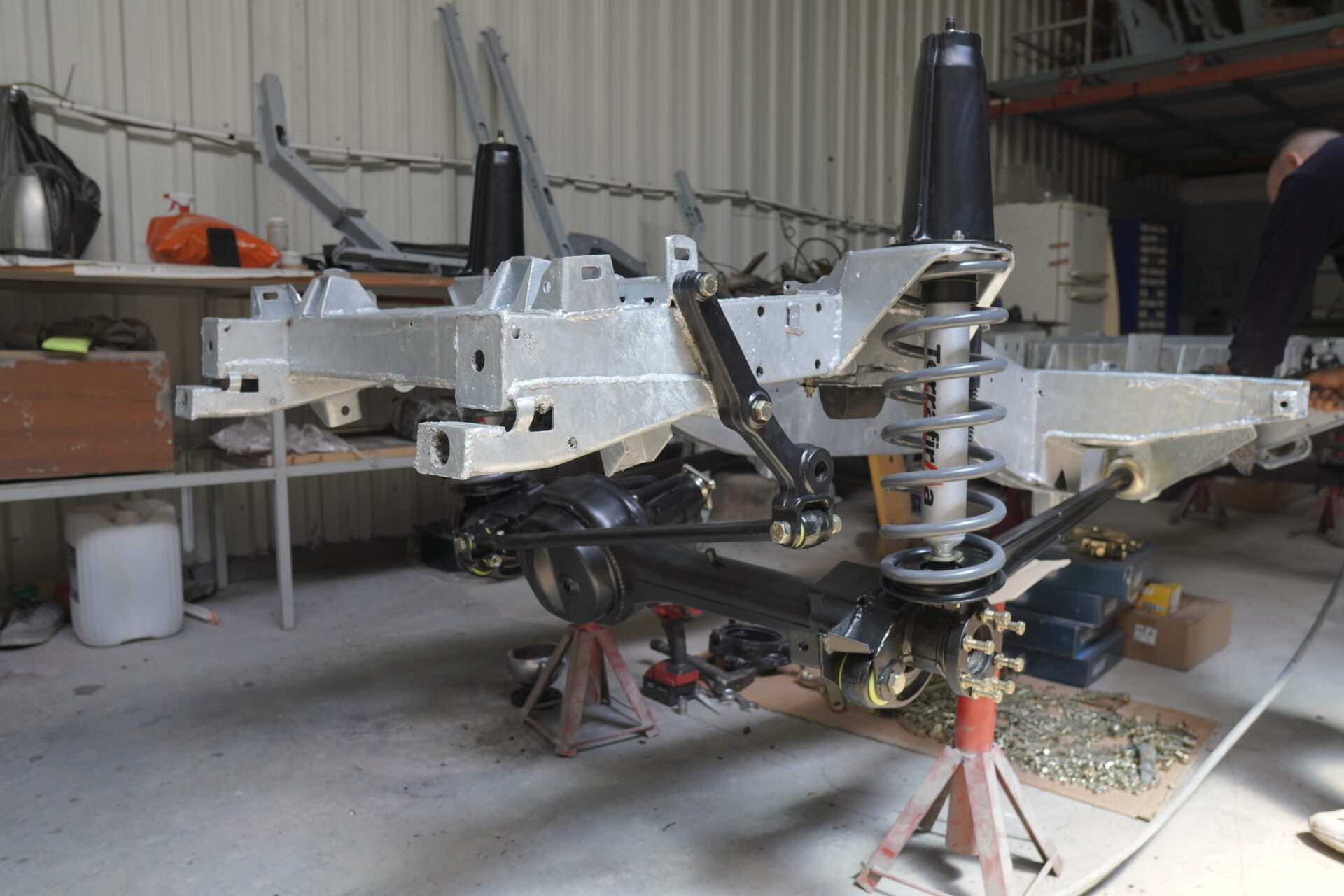
With the body restoration complete, attention turns to rebuilding the vehicle’s mechanical foundation. The axles, suspension, steering, braking system, and drivetrain are restored and reassembled to ensure dependable performance both on and off the road.
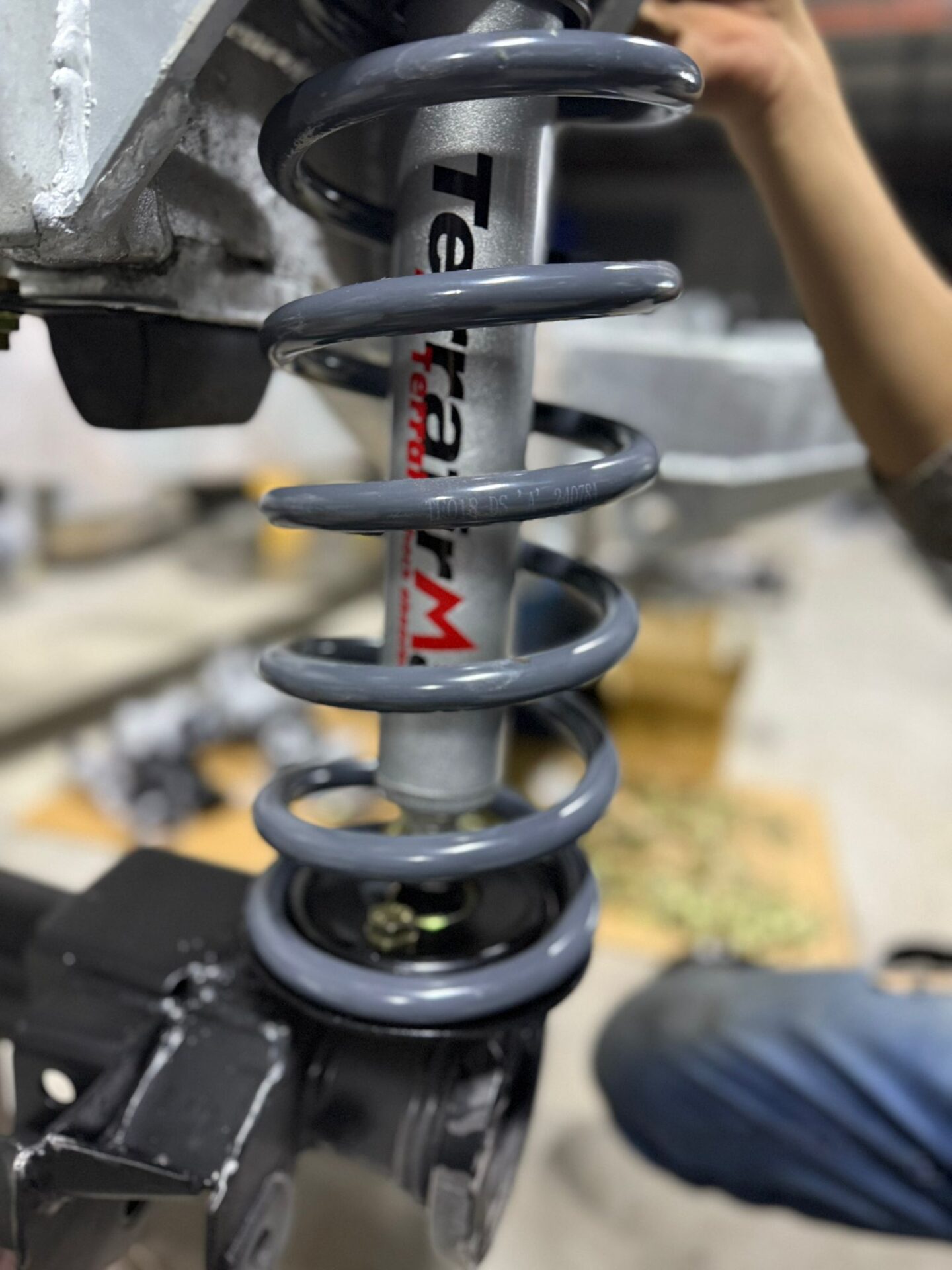
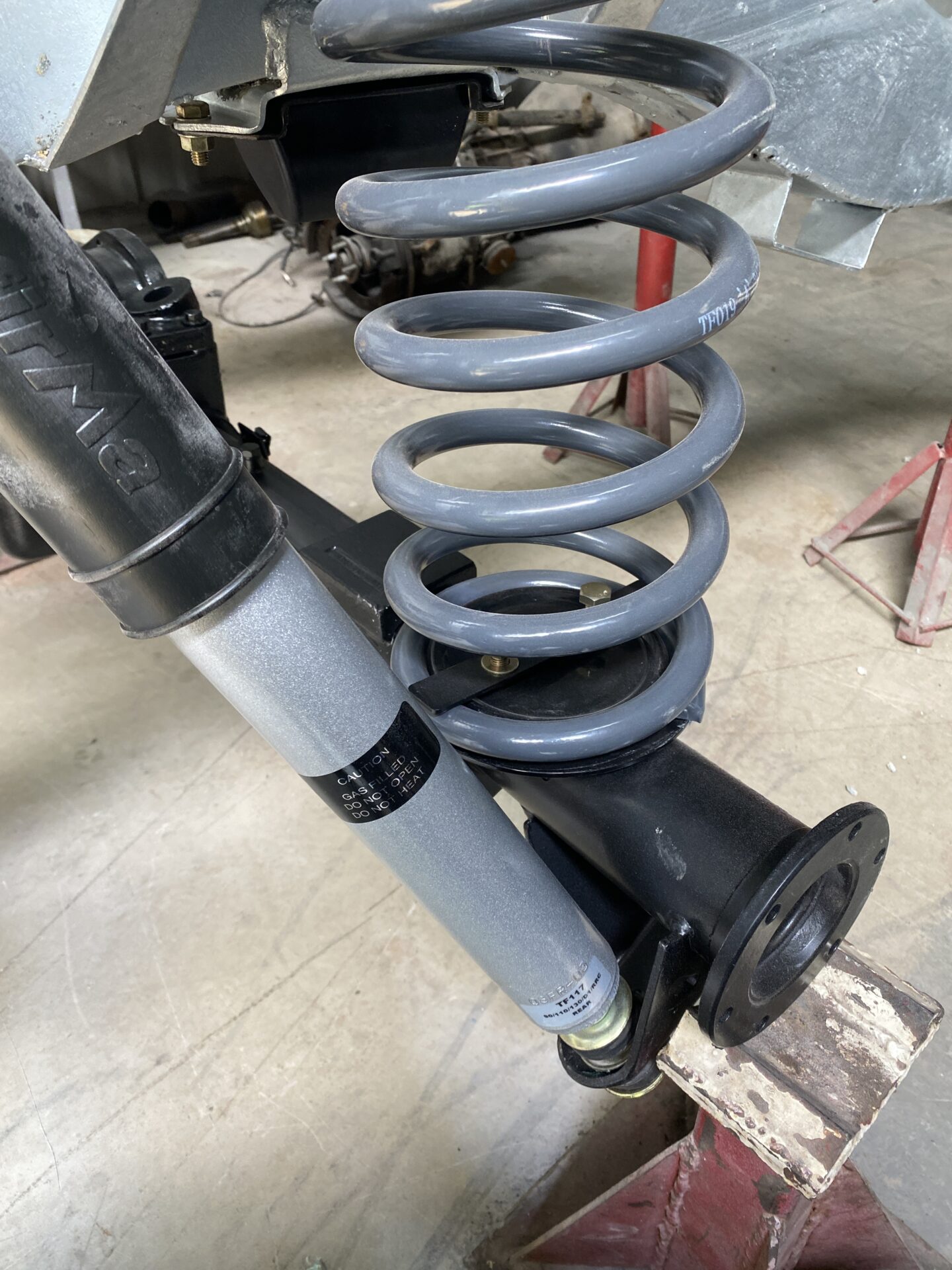
For most restorations, we utilize Terrafirma suspension components, selected for their balance between off-road capability and everyday drivability. Springs, shock absorbers, bushings, steering linkages, and suspension hardware are renewed throughout the vehicle to eliminate play and restore a precise, confident driving experience.
The steering system is fully rebuilt or replaced depending on its condition. Steering boxes are disassembled and inspected, with seals, gears, bearings, and wear components renewed as necessary to restore proper operation.
Differential & Drivetrain Restoration
The differentials and axle assemblies are completely disassembled, inspected, and restored. Housings are cleaned, sandblasted, and refinished before reassembly. Internal gears, bearings, seals, pins, and wear components are inspected and replaced where required.
Throughout the build, original fasteners are replaced with new hardware to ensure reliability and long-term serviceability.
Heavy-duty steering rods and drivetrain components are installed where appropriate to improve durability and provide a more robust driving experience.
Brake System Restoration
The braking system is comprehensively renewed during this phase. Brake calipers, brake discs, brake pads, hydraulic components, swivel assemblies, and associated hardware are replaced or rebuilt as required.
The result is a braking system that provides significantly improved stopping power, safety, and confidence compared to an aging original setup.
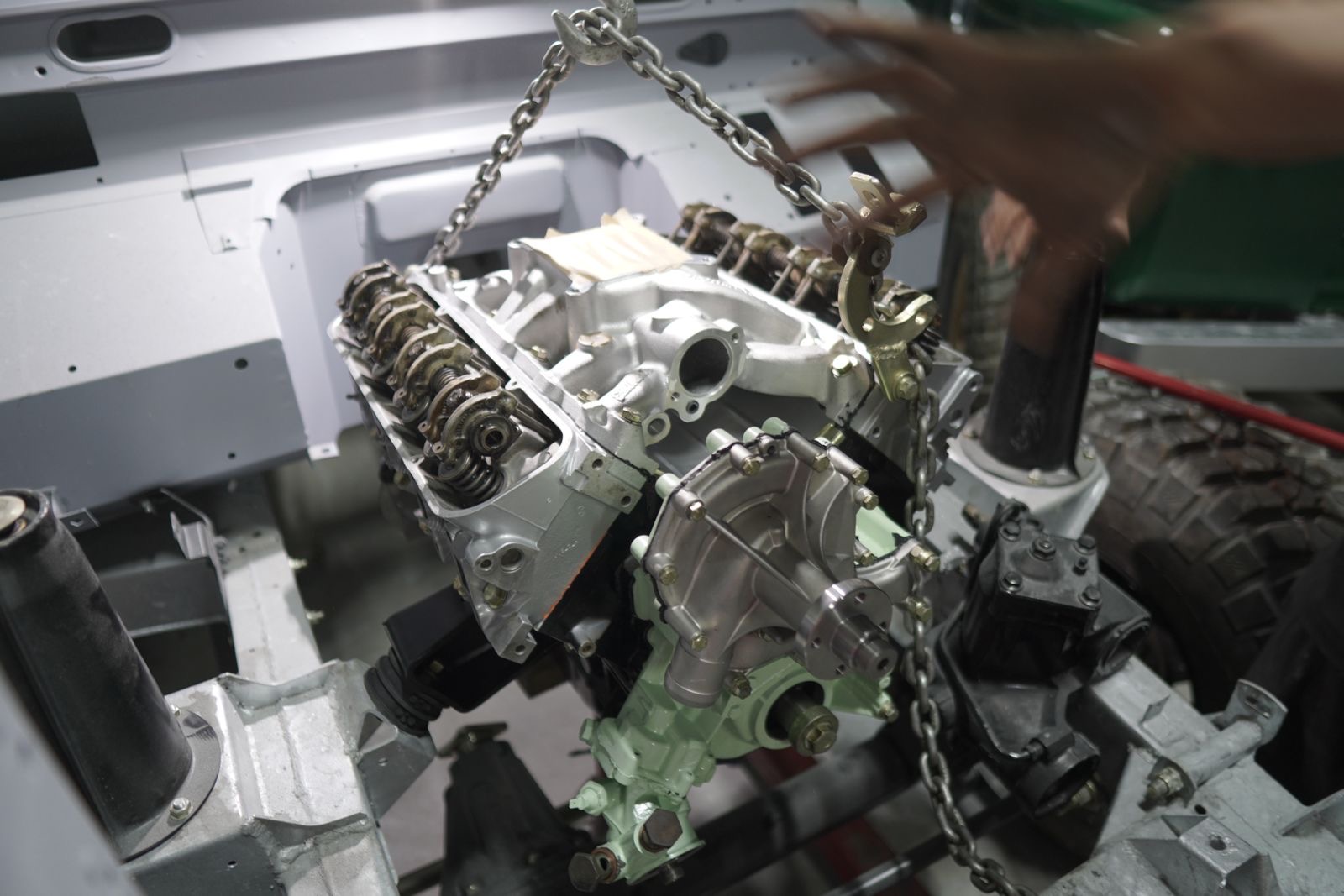
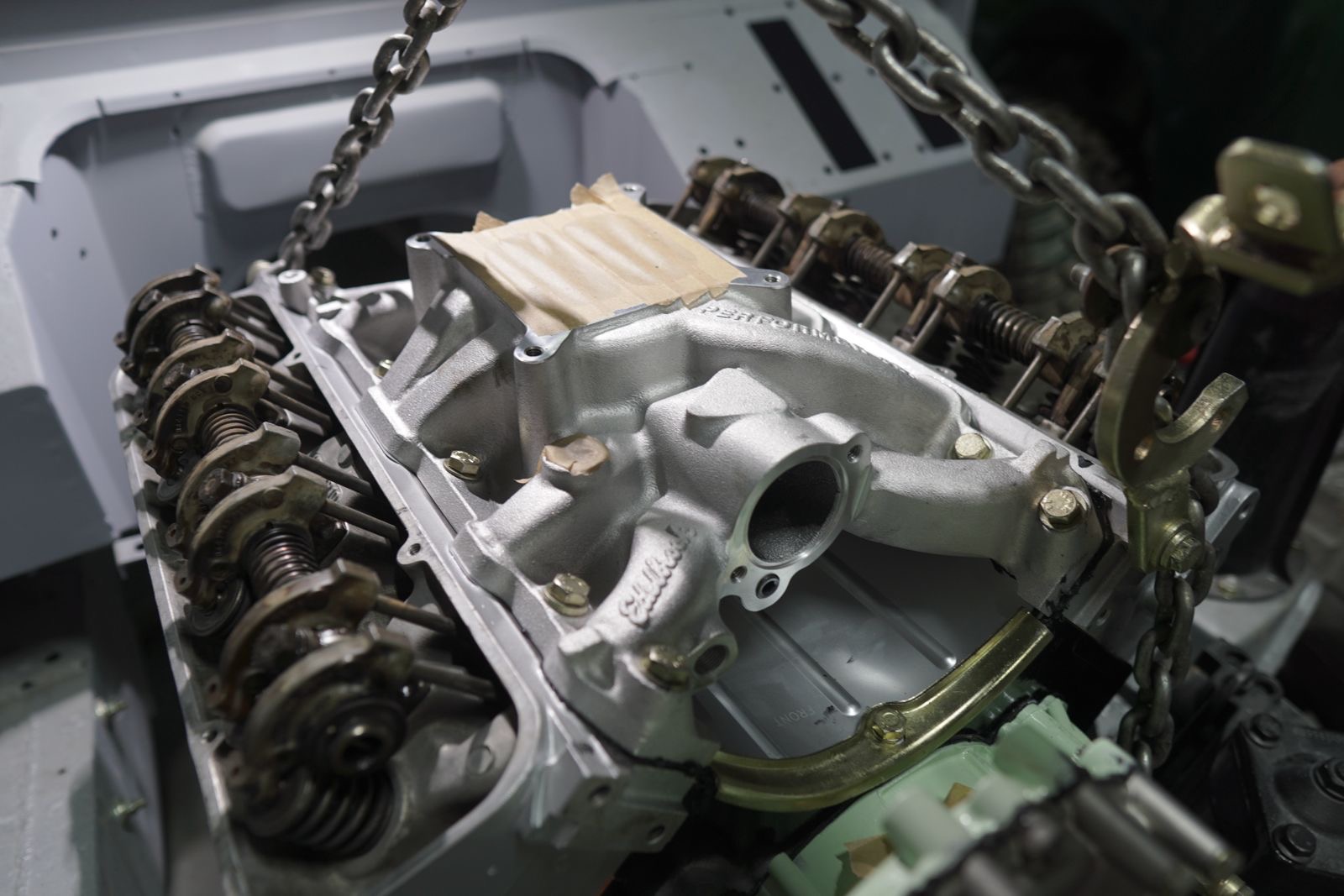
Complete Engine Rebuild
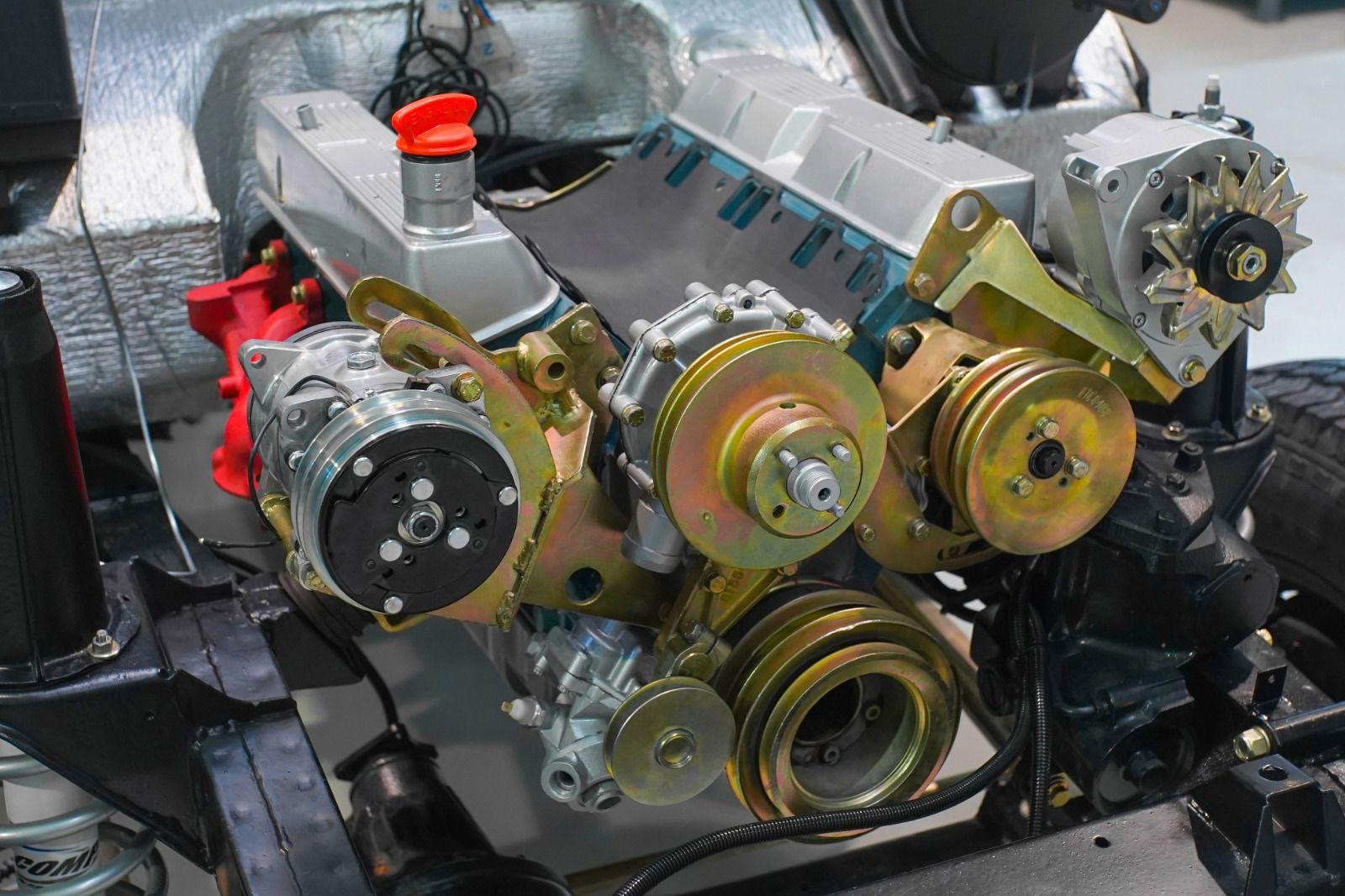
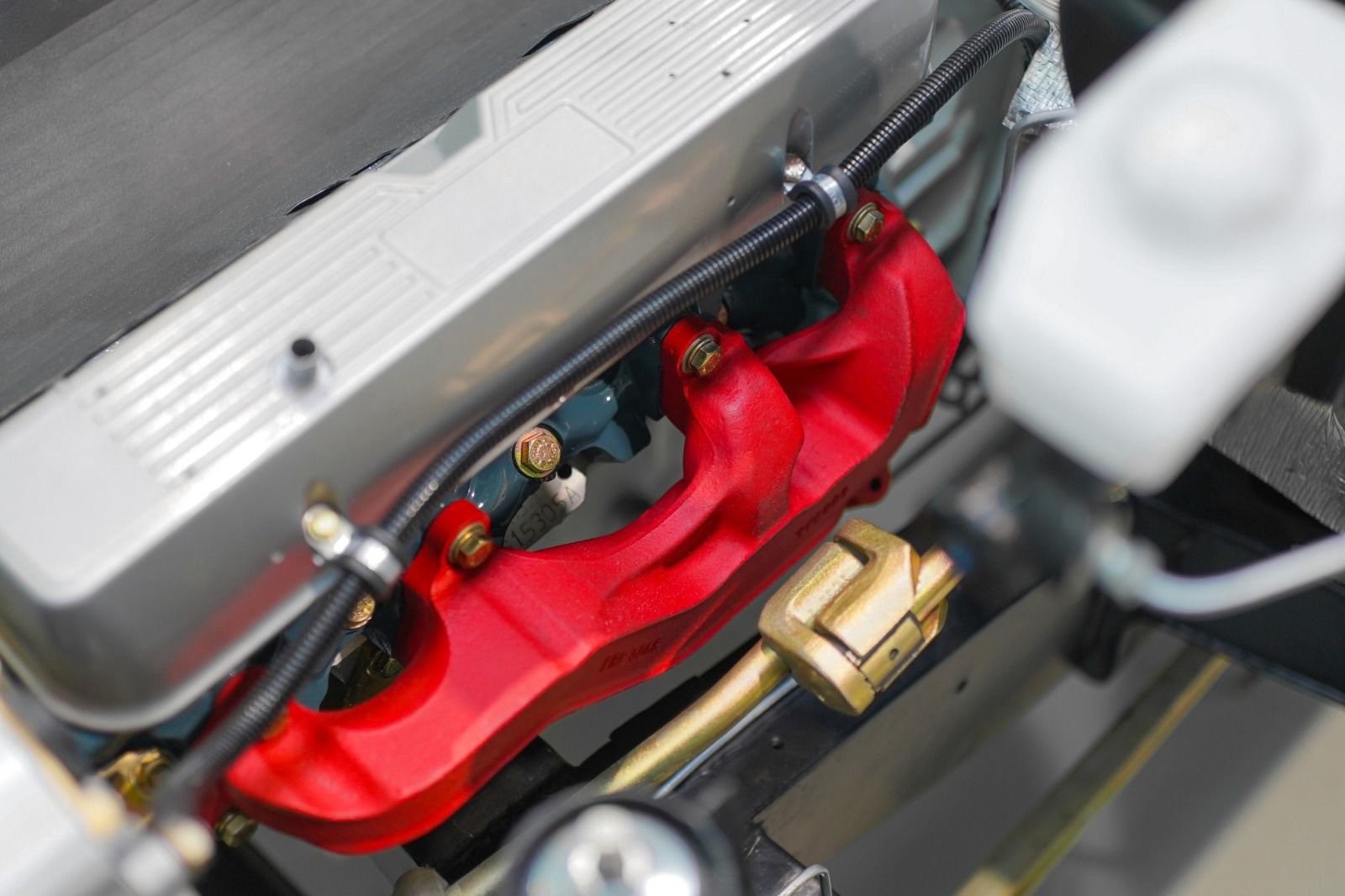
Every original engine undergoes a comprehensive rebuild process. The engine is fully disassembled, inspected, measured, machined, and reassembled to ensure it meets our standards for reliability and performance.
Cylinder heads are reconditioned and machined, cylinders are measured and honed, liners are renewed where required, and pistons, bearings, seals, gaskets, and wear components are replaced. Oil pressure and compression measurements are taken multiple times throughout the build process to verify engine health and performance.
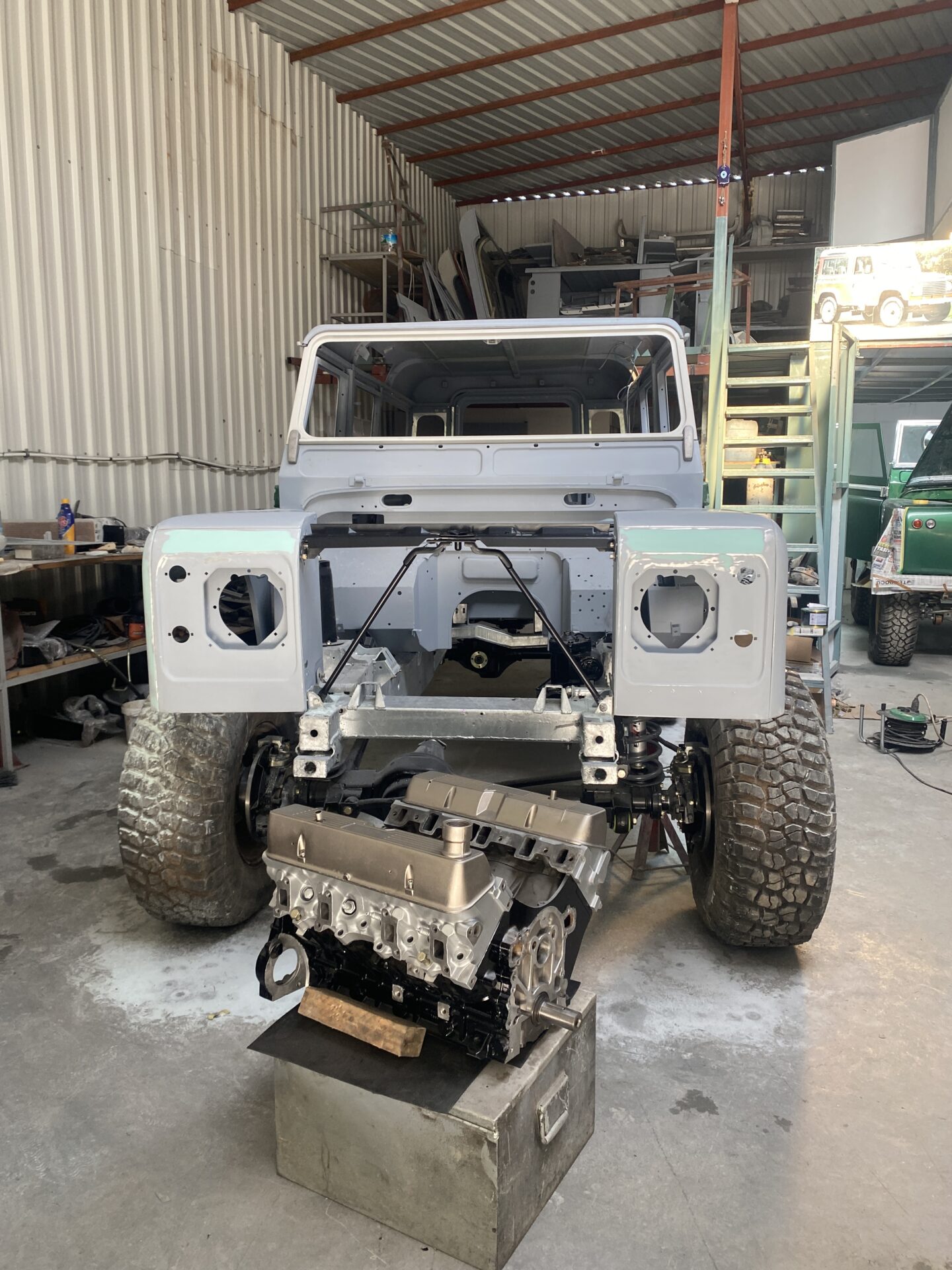
Once completed, the engine is refinished and protected prior to installation. Following installation into the chassis, it remains protected from dust, moisture, and contaminants while the remainder of the restoration progresses. Find more about your engine choices here.
Electrical System Installation
The electrical system is rebuilt and installed during this stage. Wiring, lighting, charging systems, instrumentation, comfort upgrades, and accessories are integrated and tested to ensure reliable operation.
Modern conveniences such as air conditioning, Apple CarPlay, reverse cameras, premium audio systems, electric windows, and auxiliary lighting are installed according to the project’s specification.
Testing, Validation & Road Trials
Once assembly is complete, the vehicle undergoes extensive testing and quality control procedures. Engine compression, oil pressure, cooling system performance, charging system operation, drivetrain functionality, steering response, braking performance, and electrical systems are all verified.
Every Phoenix Restorations build is then subjected to real-world road testing of up to 300 kms (approximately 190 miles). This allows us to identify and correct any issues before delivery while ensuring that the vehicle performs as intended under normal driving conditions.
Only after successfully completing these tests does the vehicle move forward for final detailing, inspection, and customer delivery.
Deliverables During Phase 3
✓ Axles restored and installed
✓ Suspension system rebuilt and installed
✓ Steering system rebuilt and tested
✓ Differential assemblies restored
✓ Brake system renewed and tested
✓ Complete engine rebuild completed
✓ Drivetrain assembly completed
✓ Electrical systems installed and tested
✓ Modern comfort upgrades installed
✓ Engine compression and oil pressure verified
✓ Quality-control inspections completed
✓ Up to 300 miles of road testing completed
✓ Vehicle approved for final delivery
STAGE 4 : PAINT & BODY ASSEMBLY
Corrosion Protection & Surface Preparation
Once the chassis restoration and body preparation stages have been completed, all steel components are treated to protect against future corrosion. Particular attention is given to preventing galvanic corrosion: The process by which two dissimilar metals can react when exposed to moisture, causing corrosion to spread between them.
By properly preparing, isolating, and protecting these materials during assembly, we help ensure the longevity of both the steel and aluminum components throughout the vehicle. Learn why chassis condition plays such an important role in Defender reliability.
Body Alignment & Panel Fitting
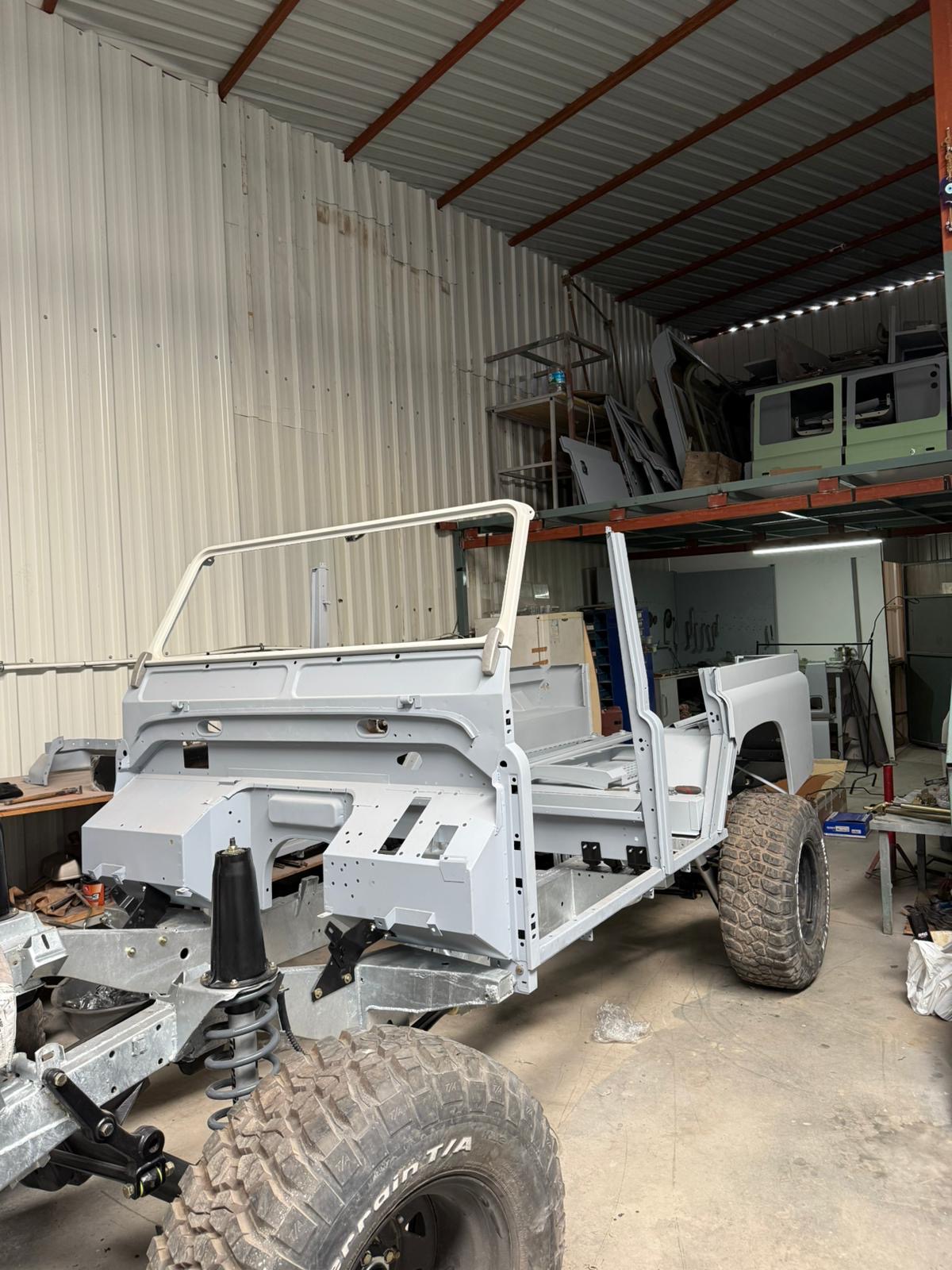
With the body structure prepared, the vehicle enters one of the most important stages of the restoration process: body alignment and panel fitting.
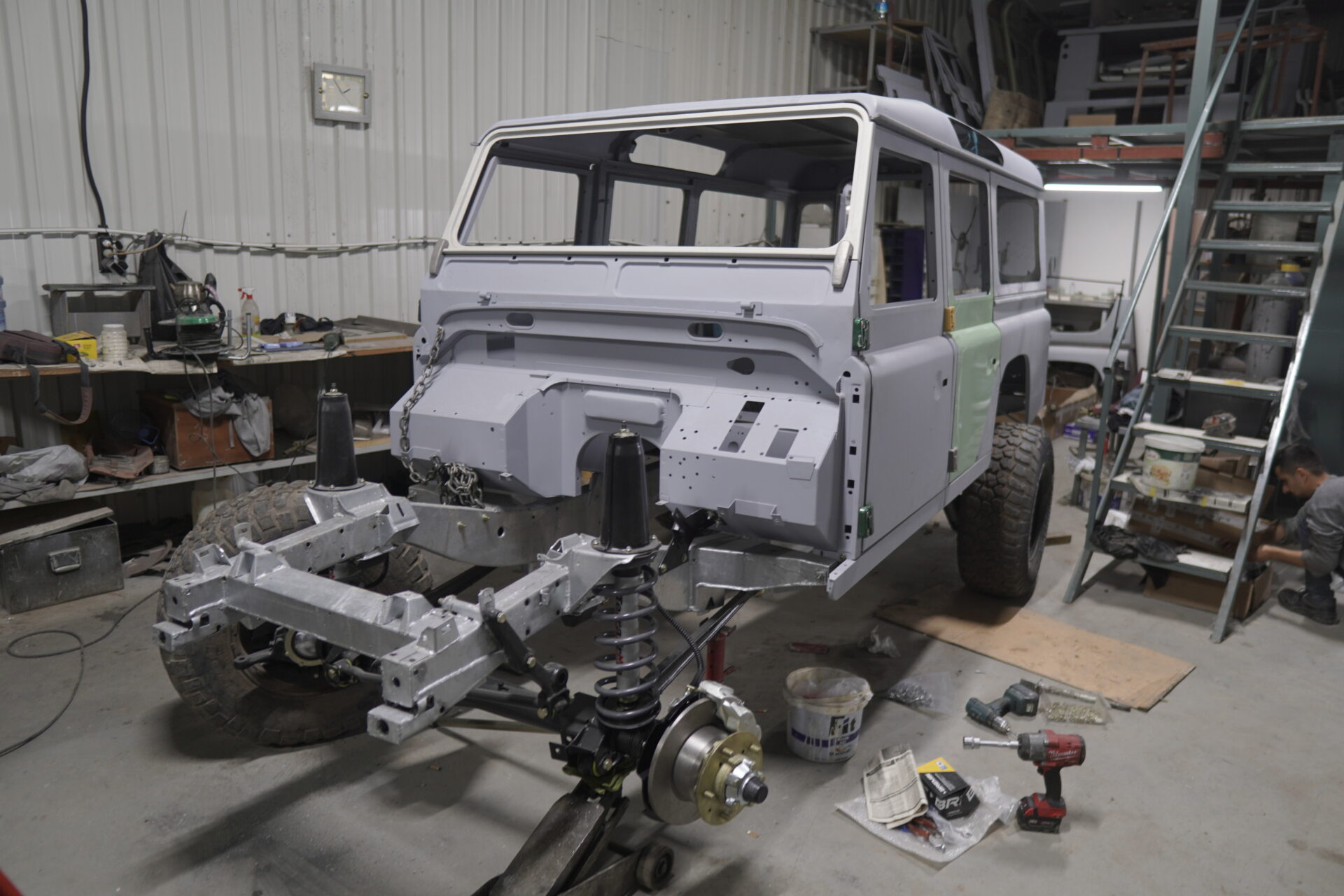
Although we use genuine Defender-specification body components, achieving proper panel alignment is far from a simple bolt-on procedure. Land Rover Defenders were originally built with relatively loose manufacturing tolerances, meaning that even brand-new body panels often require extensive adjustment to achieve a consistent fit and finish.
Our technicians carefully align the doors, roof, front wings, rear tub, bulkhead, and body panels to ensure uniform panel gaps throughout the vehicle. One of the methods we use internally is what we refer to as the “pinky test”—the ability to slide a finger consistently through panel gaps and door openings without significant variation. While simple in concept, achieving this level of consistency requires patience, experience, and multiple rounds of adjustment.
Trial Assembly & Quality Verification
Before any paintwork begins, the vehicle is assembled and aligned multiple times.
This stage allows us to verify door operation, panel gaps, body lines, roof alignment, and the overall fitment of the vehicle before committing to the final finish. Any inconsistencies are corrected at this stage rather than after paint has been applied.
Because a Defender’s body consists of numerous individual steel and aluminum components, achieving proper alignment is a meticulous process involving countless small adjustments, shims, mounting points, and fastening locations.
Only once we are fully satisfied with the fitment do we proceed to the paint stage.
Paint Preparation & Refinishing
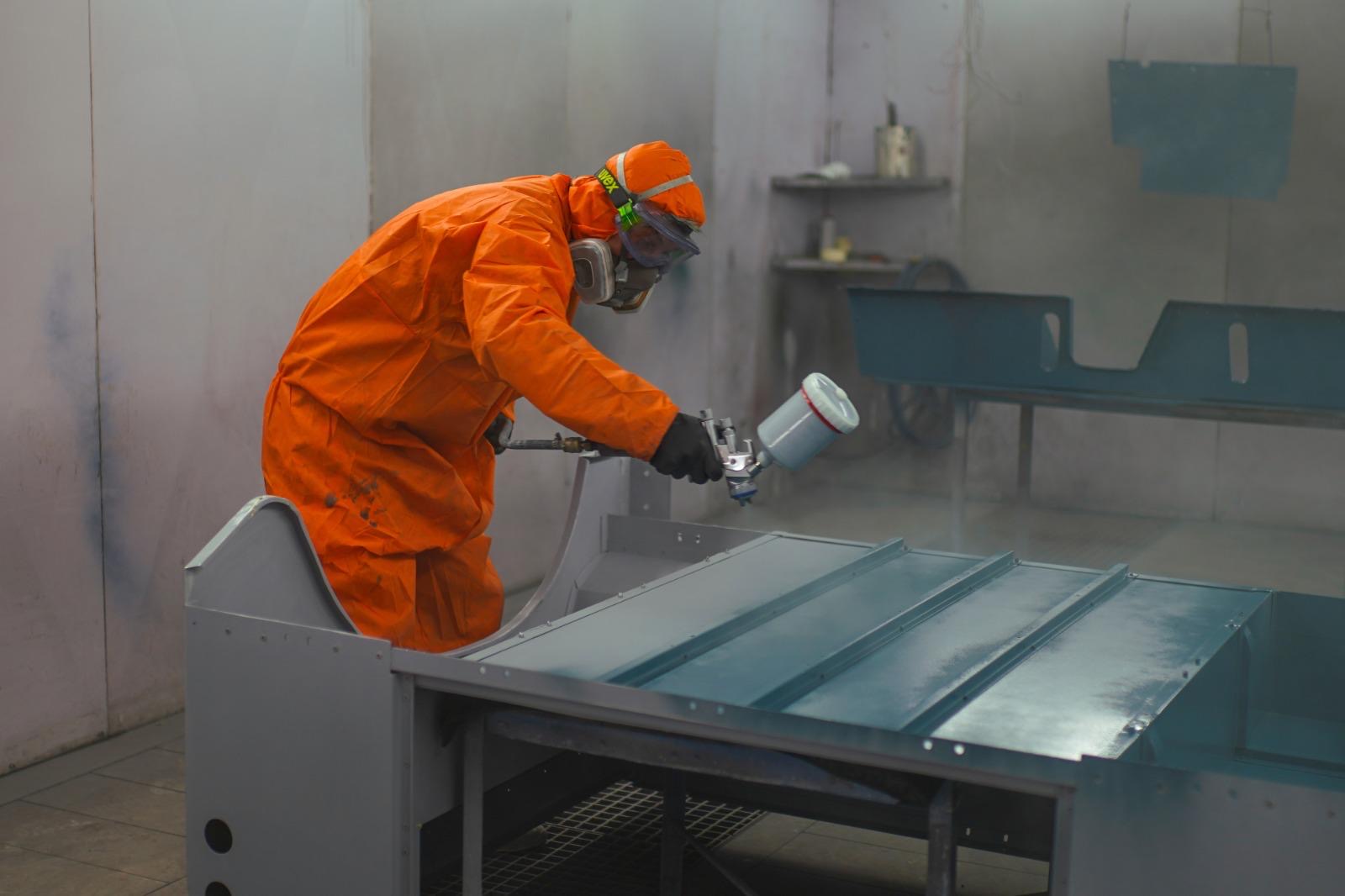
Following final alignment approval, the vehicle undergoes comprehensive paint preparation. Surfaces are inspected, corrected, and prepared to ensure a smooth and durable finish.
The body then moves into the paint booth, where multiple coats of paint are applied in accordance with the selected specification. Between each stage, the finish is inspected and refined to achieve the quality standards expected of a Phoenix Restorations build.
The result is a vehicle that not only looks exceptional from a distance, but also withstands close inspection through consistent panel fitment, clean body lines, and a high-quality finish throughout.
Deliverables During Phase 4
✓ Corrosion protection systems applied
✓ Complete body assembly and panel fitting
✓ Door and body gap alignment verified
✓ Trial assembly and quality-control inspections completed
✓ Final body geometry approved
✓ Multi-stage paint preparation completed
✓ Premium paint application completed
✓ Paint finish quality inspection completed
✓ Body approved for mechanical and interior assembly
Stage 5 : Interior Installation & Modern Comfort Upgrades
Dashboard & Interior Assembly
Once the mechanical assembly has been completed, attention turns to the interior. This is where the vehicle begins its transformation from a restoration project into a comfortable and enjoyable daily driver.
The dashboard, interior trim, center console, door panels, headliner, and cabin components are installed according to the approved project specification. Every component is carefully fitted and inspected to ensure proper operation and finish quality throughout the cabin.
Modern Electrical & Technology Integration
Every vehicle receives a completely renewed electrical system designed to provide reliability while supporting modern technology and accessories.
To improve everyday usability, we install Apple CarPlay-compatible infotainment systems, premium audio equipment, reverse cameras, charging ports, LED lighting systems, and other technology upgrades selected by the client.
These upgrades provide modern-day convenience while preserving the timeless character of the Defender.
Air Conditioning & Daily Driving Comfort
One of the most significant improvements made during the restoration process is the installation of a modern air conditioning system.
Combined with improved electrical systems and modern controls, these upgrades help transform the Defender into a vehicle that can comfortably be enjoyed in a wide variety of climates and driving conditions.
Upholstery & Seating Installation
The seating is completely renewed throughout the vehicle. Both front and rear seating systems are rebuilt or replaced with brand-new components and upholstered using premium leather, Alcantara, or a combination of both.
Material selection, stitching patterns, textures, and color combinations are tailored to match the overall design direction of the build while maintaining a balance between luxury, durability, and practicality.
Flooring, Lighting & Bespoke Details
The final stage of the interior installation focuses on the details that make each vehicle unique.
Depending on the project specification, this may include custom flooring, wood accents, LED ambient lighting, upgraded headliners, bespoke trim pieces, and other personalized touches.
Many clients choose our preferred combination of durable flooring paired with removable sisal mats, offering an ideal balance between practicality, comfort, and classic Defender character.
Final Interior Inspection
Before moving to final delivery, every interior component is inspected for fitment, functionality, finish quality, and overall presentation.
The result is an interior that retains the unmistakable character of a classic Land Rover Defender while delivering the comfort, refinement, and usability expected from a modern vehicle.
Deliverables During Stage 5
✓ Complete interior assembly completed
✓ New dashboard and trim components installed
✓ Modern air conditioning system installed
✓ Apple CarPlay infotainment system installed
✓ New electrical wiring and accessories installed
✓ Front and rear seating systems installed
✓ Leather and Alcantara upholstery completed
✓ LED lighting systems installed
✓ Flooring and mat systems installed
✓ Interior quality-control inspection completed
Final Quality Assurance Controls
Comprehensive Mechanical Validation
Before any vehicle is approved for delivery, it undergoes a comprehensive series of mechanical inspections and performance tests. While the Land Rover Defender Restoration process focuses on rebuilding every major system, the quality assurance stage is designed to verify that those systems perform exactly as intended under real-world conditions.
Engine compression measurements are performed to confirm cylinder sealing and overall engine health. Oil pressure is monitored and verified throughout the testing process to ensure proper lubrication and long-term reliability. Cooling system performance, charging system operation, drivetrain functionality, steering response, braking performance, and suspension operation are all inspected and validated. Read our guide on Land Rover Defender reliability.
Electrical System Testing
Every electrical component is individually tested before delivery. This includes lighting systems, gauges, charging circuits, air conditioning, infotainment systems, cameras, power accessories, and all customer-selected upgrades.
Our goal is to ensure that every electrical system functions reliably before the vehicle leaves our facility.
Road Testing & Real-World Validation
A vehicle may look complete inside the workshop, but it has not yet proven itself on the road.
For this reason, every Phoenix Restorations build undergoes extensive road testing of up to 300 kilometers. During this process, the vehicle is driven under a variety of real-world conditions to identify and correct any issues that may arise during operation.
Engine performance, oil pressure, cooling temperatures, driveline behavior, braking performance, steering feel, suspension operation, and overall drivability are continuously monitored throughout the testing period.
Any observations made during road testing are addressed before the vehicle progresses to final approval.
Final Documentation & Delivery Preparation
Following successful completion of testing, the vehicle undergoes a final inspection and detailing process.
At this stage, we capture final photography and road-ready video footage of the completed vehicle, documenting the results of the restoration and creating a permanent record of the build prior to delivery.
Only after passing all quality-control inspections, testing procedures, and final reviews is the vehicle approved for handover to its new owner.
Deliverables During Final Quality Assurance
✓ Engine compression testing completed
✓ Oil pressure verification completed
✓ Cooling system performance verified
✓ Electrical system testing completed
✓ Air conditioning system tested
✓ Lighting and accessory systems verified
✓ Steering, suspension, and braking systems tested
✓ Drivetrain functionality verified
✓ Up to 300 kilometers of road testing completed
✓ Quality-control inspections completed
✓ Final photography completed
✓ Final road-ready video footage captured
✓ Vehicle approved for customer delivery
Why Restoring a Defender Properly Takes Time?
A proper Land Rover Defender restoration is far more involved than a cosmetic refurbishment.
Many restorations focus primarily on appearance, replacing visible components while leaving decades-old mechanical systems, corrosion, and structural issues hidden beneath the surface. While this approach may produce a vehicle that looks impressive in photographs, it often fails to deliver the reliability and longevity expected from a premium restoration.
At Phoenix Restorations, every vehicle is stripped down to its bare chassis before being rebuilt. The chassis is repaired, sandblasted, acid-treated, and hot-dip galvanized. The body is repeatedly assembled and aligned before paint is applied. The engine, drivetrain, steering, suspension, braking systems, and electrical components are comprehensively restored before extensive road testing takes place.
These processes require time, patience, and attention to detail, but they allow us to deliver a Defender that is designed to be driven, enjoyed, and trusted for years to come.
For us, restoration is not simply about how a vehicle looks on delivery day. It is about how it performs thousands of miles later. To read more about Restoration Cost, Defender Reliability and to decide between buying or comissioning your own build, click here. To contact us with an inquiry, click contact.
classıc land rover restoratıon FAQ
This Classic Land Rover Restoration FAQ was created to provide clarity around the restoration, ownership, and long-term preservation of classic Land Rover Defenders and Series models. From galvanized chassis and engine options to reliability, shipping, and customization, we aim to answer the questions that matter most to enthusiasts and future owners alike. At Phoenix Restorations, we believe a proper restoration goes far beyond cosmetics — it should create a vehicle built to endure for decades.
How long does a typical build take?
Complete restorations with the original OEM engine typically take around 4 months, plus logistics. For performance builds featuring a Corvette LS1 or LS3 swap, the timeline extends to approximately 6 months. A detailed, stage-by-stage schedule is always provided during your consultation. What warranty do you offer? We provide a limited workmanship warranty on all restorations. It covers restoration-related issues but does not include normal wear or age-related component failures. Independent inspections are welcome, and we can assist with any documentation needed for third-party warranties.Why are galvanized chassis are important?
A galvanized chassis is one of the most important long-term investments in a Defender or Series restoration. Unlike standard painted chassis, hot-dip galvanization coats the steel in protective zinc, dramatically reducing the risk of corrosion caused by moisture, humidity, mud, salt, and long-term exposure.
Because the chassis is the structural foundation of the vehicle, corrosion in these areas can eventually compromise safety, rigidity, and long-term reliability. At Phoenix Restorations, our full restorations include galvanized chassis to help ensure the vehicle remains protected for decades rather than just looking good cosmetically for a few years.
Do you help with import regulations? Yes. We support customers with import regulations for eligible countries, including the U.S. and certain EU markets. In Miami, our operations run through Phoenix Restorations LLC, ensuring a smooth, transparent purchase process. If you wish to manage the import independently, we can provide expert guidance and full export documentation to assist you. Learn more here.Defender Ownership
What is the difference between the Defender and the Series?The Land Rover Series models are the predecessors to the Defender and represent the earliest generations of classic Land Rover heritage.
Compared to a Defender, a Series vehicle offers:
- More vintage styling and driving character
- Simpler mechanical systems
- A more analog driving experience
- Greater collector appeal for purists
Defenders generally provide more modern drivability, improved refinement, and higher cruising comfort. Series models are often chosen by enthusiasts looking for a more raw and nostalgic classic driving experience. To read more about the advantages of owning a Series model, click here.
What should buyers look for when purchasing a Defender?
We always encourage buyers to look beyond paintwork and interiors.
Some of the most important areas to inspect include:
- Chassis condition
- Bulkhead corrosion
- Door frame corrosion
- Wiring quality
- Water sealing and drainage points
- Mechanical rebuild documentation
- Suspension and drivetrain work
- Panel alignment and fitment quality
A visually attractive Defender can still hide significant structural or mechanical issues underneath.
We believe the quality of a restoration is determined by the work you do not immediately see – especially underneath the vehicle. To read more about Defender ownership, find our post talking about what to look for 👉 here
Are classic Defenders reliable for long trips?
A properly restored Defender can be extremely dependable when restoration work is performed thoroughly rather than cosmetically.
Our restorations focus heavily on:
- Cooling system reliability
- Wiring integrity
- Drivetrain rebuilding
- Rust prevention
- Water sealing
- Suspension and braking systems
Many of our builds are designed specifically for long-distance touring, countryside travel, and regular use rather than occasional display purposes.
Like any classic vehicle, maintenance and proper care remain important, but a well-restored Defender can be a very capable and confidence-inspiring long-distance vehicle. To read more about reliability on a Defender, read 👉 here
How should I care about my Defender / Series after restoration?
Classic Land Rovers benefit greatly from regular preventative maintenance and proper storage habits.
We generally recommend:
- Regular fluid checks and servicing
- Keeping drainage channels and seals clean
- Washing the underside after exposure to salt or mud
- Periodic rust inspections in high-moisture areas
- Maintaining battery health during long storage periods
- Using the vehicle regularly rather than leaving it unused for extended periods
A properly restored Defender or Series vehicle is built to be driven and enjoyed. With proper care and routine maintenance, these vehicles can remain dependable and visually beautiful for decades.
What is the best engine option for a classic Defender?The best engine depends entirely on how you plan to use the vehicle.
- The 300Tdi is known for simplicity, reliability, and long-distance touring capability.
- The original V8 offers a more emotional and classic driving experience with improved sound and character.
- The TD5 offers a more refined and modern Land Rover driving experience while still retaining strong mechanical character and excellent torque delivery.
- LS-based builds provide significantly more modern performance and highway power.
During consultation, we help match the engine choice to your driving style, location, and long-term ownership goals. Find out more about what engine option better suits your style at this link.
Can a Defender be used comfortably in modern traffic? Yes — especially when restored thoughtfully.
While classic Defenders still retain their vintage character, upgrades such as:
- Improved suspension
- Sound insulation
- Air conditioning
- Power steering
- Automatic transmission options
- Modern infotainment systems
can significantly improve daily usability while preserving the identity of the vehicle.
Why do some Defenders still rust after a restoration?
Rust prevention depends heavily on the quality of preparation underneath the paint.
Many restorations focus primarily on cosmetic appearance, while hidden corrosion areas such as the chassis, bulkhead, roof channels, door frames, and drainage points may remain untreated.
Our approach includes:
- Chassis galvanization
- Corrosion inspection
- Proper sealing methods
- Structural metal repair
- Long-term protective coatings
We believe the longevity of the vehicle is determined underneath the paint, not just by exterior appearance.
Why do restored defenders vary so much in price?Restored Defenders can look similar on the surface while being fundamentally different underneath.
Price differences usually come down to:
-
The condition of the donor vehicle
-
The quality of chassis and corrosion work
-
Whether components were rebuilt, replaced, or simply refreshed
-
The amount of time spent on wiring, sealing, and mechanical detail
Two vehicles can share a color and interior, but only one is built to last the next 20–30 years.
Is a higher price always better? Not necessarily. A higher price only makes sense when it reflects: (1) Documented mechanical work (2) Structural integrity (especially chassis and bulkhead) (3) Thoughtful engineering decisions, not cosmetic upgrades alone. We encourage buyers to look beyond paint, wheels, and interiors, and ask how the vehicle was built underneath. To read more about understanding costs, click 👉 here
Are Land Rover Series vehicles comfortable to drive daily?
Series vehicles were originally designed as utility vehicles, so they drive differently from modern SUVs.
That said, our restorations improve comfort significantly through:
- Refreshed suspension systems
- Improved seating and upholstery
- Sound insulation upgrades
- Updated electrical systems
- Optional power steering and drivability enhancements
Many clients use their Series vehicles regularly for weekend driving, beach towns, countryside use, and collector events. It certainly provides better comfort as a leisurely vehicle, whereas Defenders can be driven daily.
SERIES OWNERSHIP
Are Series vehicles considered investments or collector cars? Well-restored Land Rover Series vehicles have become increasingly collectible worldwide due to their historical significance, analog driving feel, and timeless design.
Values depend heavily on:
- Restoration quality
- Structural condition
- Originality
- Documentation
- Mechanical integrity
Buyers are increasingly seeking properly restored examples that combine authenticity with long-term usability.
Which series models do you restore?
We restore both short-wheelbase and long-wheelbase Land Rover Series models, including:
- Series II
- Series IIA
- Series III
- 88-inch chassis (To see an example model, click 👉 here )
- 109-inch chassis (To see an example model, click 👉 here )
Each build is tailored individually depending on the donor vehicle, intended use, and desired level of originality or customization.
Can you modernize a Land Rover Series while keeping it’s classic look?
Yes. One of the advantages of a custom Series restoration is the ability to subtly modernize the vehicle while preserving its original character.
Optional upgrades may include:
- Power steering
- Disc brake conversions
- Upgraded audio systems
- Apple CarPlay integration
- Improved lighting
- Enhanced seating materials
- Modern charging and connectivity options
We aim to preserve the classic identity of the vehicle while improving usability and ownership experience.
Are Series models reliable after restoration?When restored properly, a Land Rover Series can become an extremely dependable classic vehicle.
Our restorations include:
- Full chassis inspection and repair
- Updated wiring
- Mechanical overhaul
- New seals and bushings
- Cooling system restoration
- Brake and suspension rebuilding
We focus heavily on long-term reliability and preventative restoration work rather than cosmetic refurbishment alone.
PROCESS & LOGISTICS
Do you provide build updates? Yes. We provide weekly photo and video updates, including GoPro footage of the build process when requested. You can follow your Defender’s progress from start to finish.
What countries do you ship to? We ship worldwide, including the United States, Canada, most of Europe, and select regions in Asia and the Middle East. Contact us for details on your location.
How can I stay updated during my build? Every client receives full virtual visibility. Through GoPro tours, detailed progress videos, and weekly updates, you can follow your Defender’s build from start to finish with complete transparency. We also do welcome visitors to our facilities.
Are your restorations done in-house? Yes. All restoration work mechanical, paint, interior, and chassis is completed in-house at our Turkey facility for complete quality control.
How are payments structured? Payments follow a simple milestone structure:
-
50% initial deposit to begin the project
-
25% mid-build payment at the restoration milestone
-
25% final payment upon completion and delivery.
Each stage includes progress updates so you can follow the build with full transparency.
What happens if a part is unavailable or delayed? If a part is unavailable, we provide alternatives, timelines, and sourcing options. Any impact on the schedule is communicated in advance.
Every Land Rover we restore starts from a different place. Rather than publish generic numbers that can mislead, we prefer to:
-
Explain what actually drives cost
-
Talk through priorities with each client
-
Show our process transparently through bi-weekly video calls, as well as supply pictures of the build process throughout the vehicle restoration process.
That way, expectations are clear before any decision is made.