
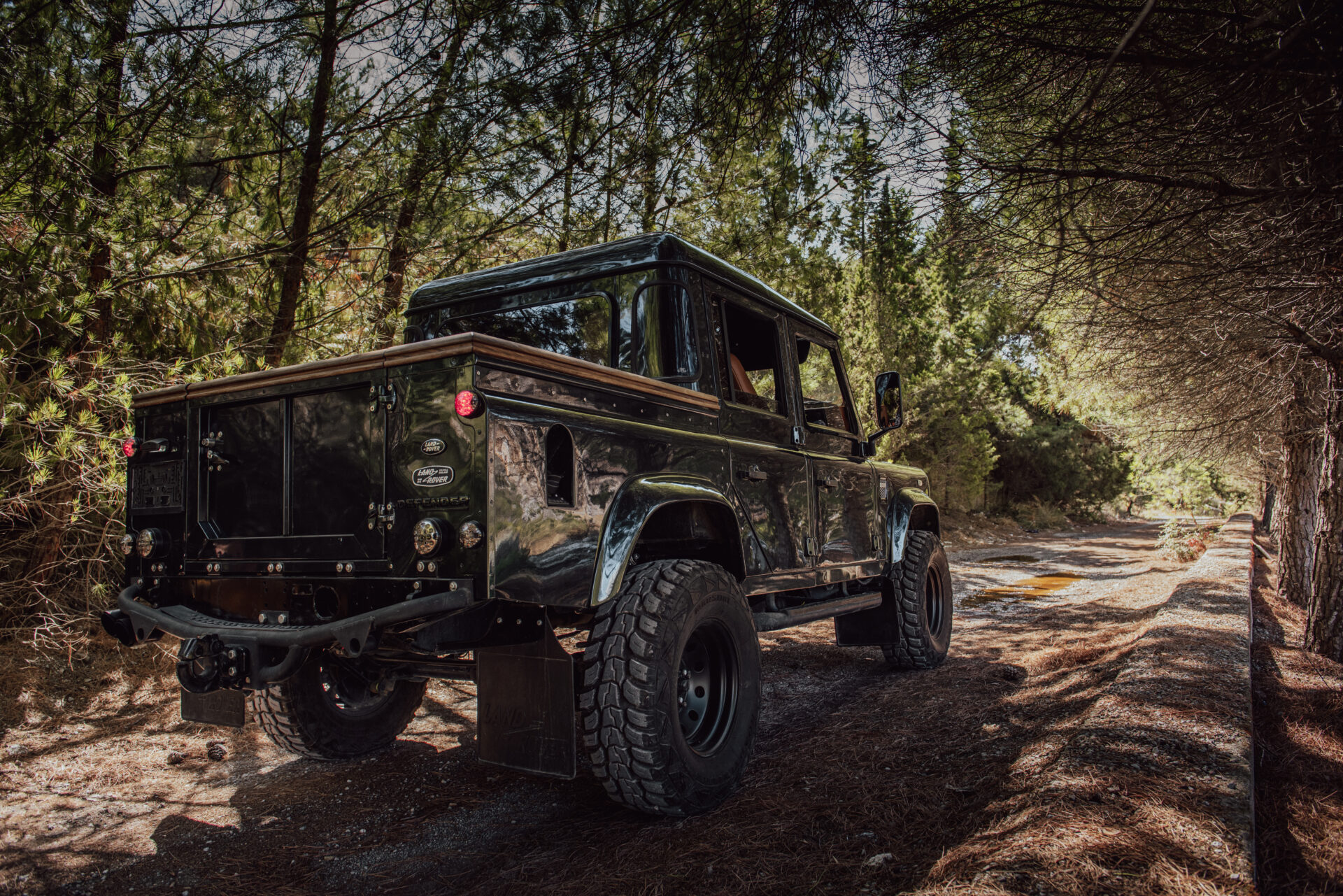
Most people who ask us about buying a Land Rover from Türkiye aren’t worried about the car. They’ve seen the build photos. What they’re worried about is everything that happens between our workshop and their garage, and honestly, that’s a fair thing to worry about. Importing a classic Land Rover into the US can go wrong in a handful of specific ways. Some of them cost a few weeks. One or two can cost you the car.
So rather than tell you it’s all easy, here are the things that actually go wrong, and what we do about each one.
Damage on the way over
A car can get scratched, dented or soaked in transit. On an open deck or in a shared roll on, roll off hold, it sits next to other vehicles for weeks in salt air, and it gets driven on and off by people who don’t know or care what it is.
Ours don’t travel that way. Every car we send to the US goes inside its own shipping container, and it’s insured for its full value from the moment it leaves us until it’s handed over. Our logistics partners arrange that cover as part of the shipment, so there’s no stretch of the journey where the car is uninsured or where it isn’t clear whose problem it is. Once it lands, cars going outside Florida travel on an enclosed truck, not an open car hauler.
Customs holds and inspections
US customs can pick any shipment for a closer look. Sometimes that’s a quick scan, sometimes the container gets opened and the car examined. Nobody can promise you it won’t happen, and anyone who does is guessing.
What decides whether an inspection is a short delay or a real problem is the paperwork. If the documents match the car and the forms are in order before it sails, an exam usually just means waiting. If something doesn’t line up, the car can sit at the port collecting storage charges while it gets sorted out. That’s why we get the paperwork right on our side before the container is ever sealed.
VIN and model year problems
This is the one people underestimate. Classic cars come into the US under the 25 year rule, which counts from when the car was built, not from what someone wrote in an advert. If the chassis number, the build date and the documents disagree, you have a problem.
Old Land Rovers make this easy to get wrong. They’ve been repaired, rebuilt and re-bodied over decades, sometimes more than once, and the paperwork doesn’t always follow. When we restore a car we take it all the way down to the chassis anyway, so we see exactly what’s there and we check the numbers on the car itself against its documents. If a car doesn’t add up, it doesn’t go to the US.
A car that was never imported properly
This is the expensive one. A car that came in on the wrong paperwork, or that was too young to qualify, can look completely fine for years. Then you try to register it in a new state, insure it, or sell it, and the questions start. In the worst cases federal authorities have seized Defenders long after they were brought in, and the owner is left with nothing.
Our setup is built to avoid exactly this. You don’t import the car yourself. Our US company, Phoenix Land Rover Restorations LLC in Miami, is the importer of record and files the EPA and DOT forms that show the car qualifies. Once it clears customs, our team in the US titles it in Phoenix’s name first, so it has a clean US title with a traceable history from the port onward. Then the title moves to you at a notary’s office, with witnesses. You can be there if you want to be. You don’t have to.
We go into the titling side in more detail in how our Defenders end up in the US under our name.
Too many people in the chain
Exporter, freight company, customs broker, port, trucker, title office. If a buyer is coordinating that themselves, every handoff is a place for something to get dropped, and when it does, everyone points at someone else.
We work with logistics companies that have been doing this for years and that we trust with our own cars. But you don’t deal with them. You deal with us. If something needs chasing, we chase it. There’s a step by step version of how a car travels in how we ship a restored Land Rover from Türkiye to the US, and duties and tariffs are covered in our Land Rover import guide.
What we can and can’t promise
We can’t control the ocean, and we can’t tell customs which containers to open. A shipment can run late. What we can do is make sure that if something does go wrong, the car is insured, the paperwork is clean, and there’s one company responsible for fixing it.
That’s the part people don’t always expect from us. We’re restorers first, and that’s what we love doing. But a beautiful car stuck at a port, or one that can’t be titled, isn’t worth much to anyone. So we’ve put just as much care into how our cars get to you as into how they’re built.
If you’re looking at a car, you can browse our restored Defenders and Series builds. If you’ve got questions about getting one to your state, talk to us. We’d rather answer them now than have you wondering later.