
Ask five people what a “full restoration” means and you’ll get five different answers. That gap is exactly why we get the same handful of questions on every first call: what actually happens to the car, in what order, and how do you know it’s being done properly instead of just made to look done.
Here’s the honest rundown of how a Defender comes back to life at Phoenix.
Teardown and assessment first, promises later
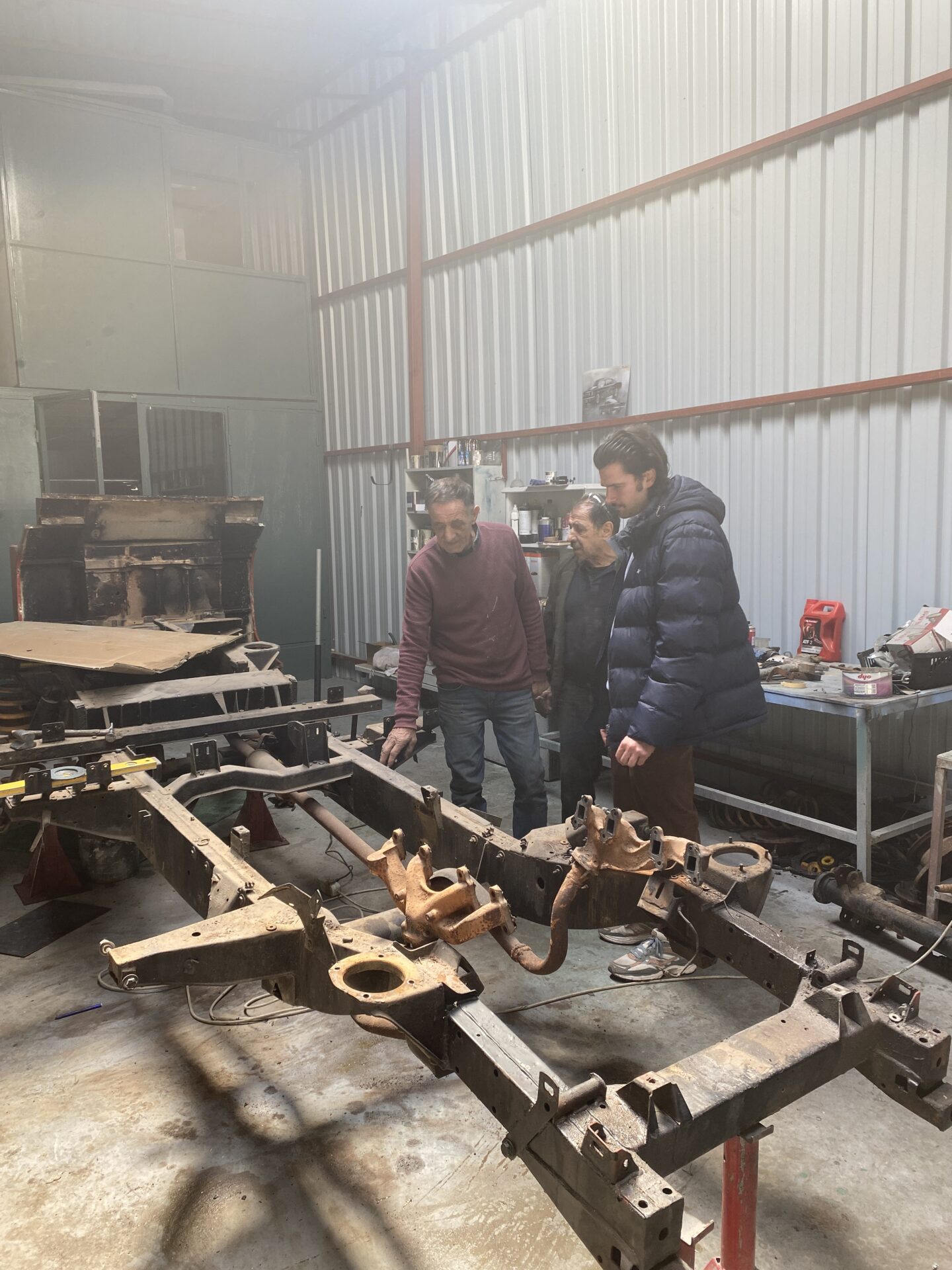
Every car starts the same way: it comes apart completely. Body off the chassis, interior stripped, engine and gearbox pulled. This isn’t optional theatre, it’s the only way to actually see what you’re dealing with. Rust hides under seam sealer. Chassis damage hides under paint. You don’t know the real scope of a Defender restoration until it’s in pieces on the floor.
We walk clients through this stage in person when we can. If you’re buying from abroad, we document it in photos and video, because this is the point where a restoration either gets built on a solid foundation or doesn’t, and you shouldn’t have to just take our word for it.
Chassis and body: where the real work lives
This is the stage that separates a proper restoration from a cosmetic refresh. Bad sections of chassis get cut out and replaced, not patched over. Body panels get the same treatment: repaired where it makes sense, replaced where it doesn’t. Land Rovers rust in predictable places, and a shortcut here is the kind of thing that only shows up two winters later, usually for the new owner, not the shop that cut the corner.
Mechanical rebuild and the engine question
Engine and gearbox choice is its own decision, and not a small one. We’ve written a longer breakdown of how we think through it here, but the short version is that it depends entirely on how you actually intend to use the car. A Defender built for weekend trail driving and one built to be a comfortable daily are two different mechanical builds wearing the same body.
Brakes, suspension, cooling, wiring: all of it gets rebuilt or replaced, not just cleaned up and reinstalled.
Interior, trim, and the parts people actually notice
By the time a Defender gets to trim and interior, it’s already mechanically sound underneath. This stage is where the car starts to feel finished: seats, headliner, door cards, the details that make a restored Defender feel intentional rather than just old and repainted.
Final assembly and testing
Everything goes back together, and then we actually drive it. Not around the block, properly, enough to catch the small stuff before it becomes your problem instead of ours.
If you want to see the finished side of this process, our restored Defender builds are a good place to look. And if you’re at the point of actually thinking through a project, get in touch, we’re happy to talk through what your specific build would actually involve.