
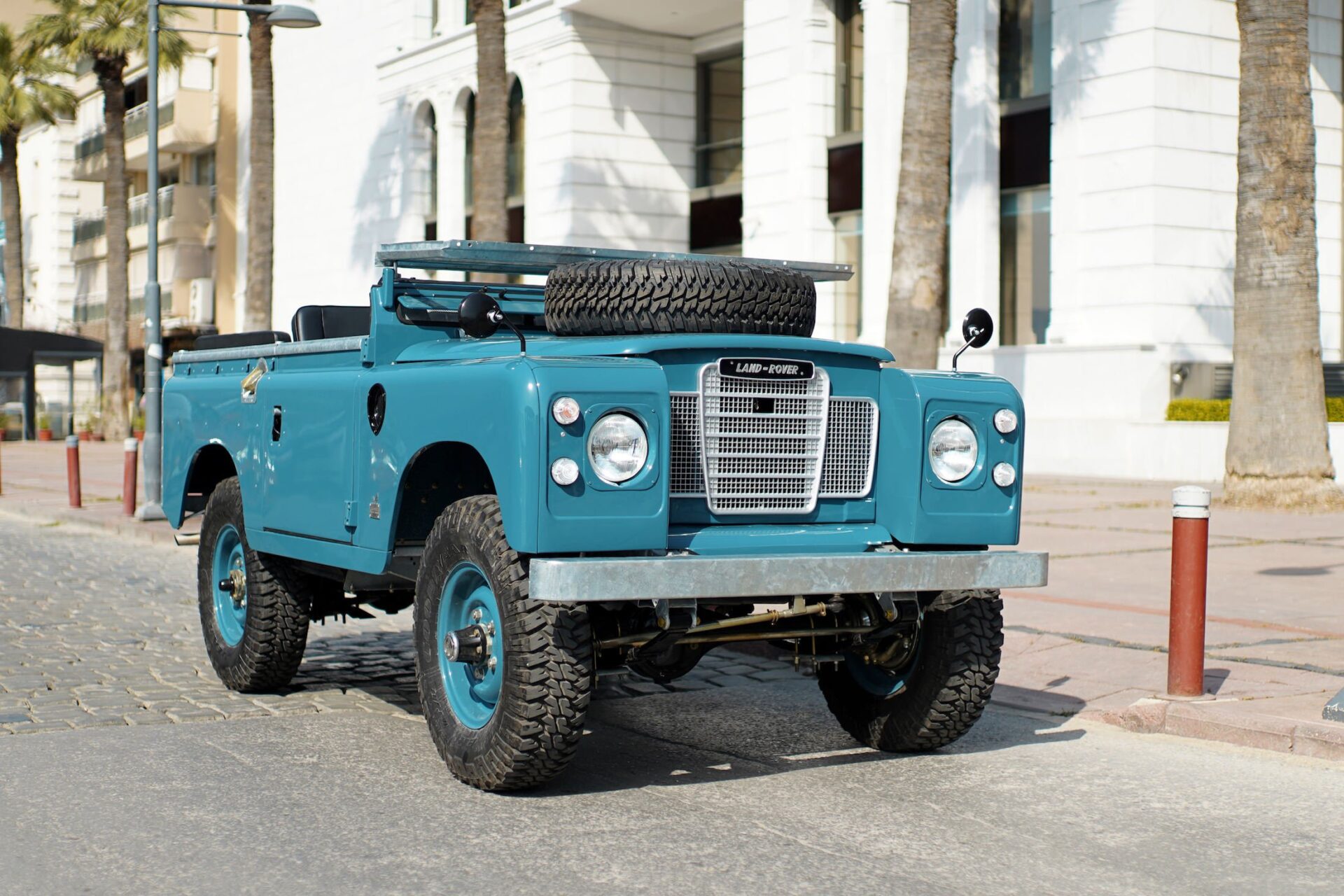
Almost everyone who asks us about a Series build has already decided they want one. What they haven’t decided is which one. So the question usually comes out as Land Rover Series 2 vs Series 3, as if it’s a coin toss between two versions of the same car.
It isn’t quite that. From ten feet away they look like close cousins, and plenty of parts swap between them. But they feel different to live with, and the right choice depends far more on how you plan to use the car than on which one photographs better. Here’s how we’d think it through.
A quick bit of history
The Series II arrived in 1958, ten years after the original Land Rover. It got the wider body with the curved “barrel” sides you still see on every Series that followed, plus the 2.25 litre petrol engine. In 1961 it became the Series IIA, which picked up a 2.25 diesel and stayed in production for a decade. Most “Series 2” cars you’ll find today are actually IIAs.
The Series III took over in 1971 and ran until 1985. Same basic chassis, same 88 and 109 inch wheelbases, same aluminium body panels. Land Rover’s changes were mostly about making the thing easier to live with.
If you want the longer story, from the 1948 Series I to the last Defender, it’s in our history of the classic Land Rover.
How to tell them apart at a glance
The grille is the giveaway. A Series II or IIA has the metal mesh grille. A Series III has a moulded plastic one. Early Series 2 cars also have their headlamps set in the front panel, right next to the grille. Late IIAs moved the lamps out to the wings, which is why some IIAs and IIIs look so alike from the front.
Open the door and it’s easier. The Series III got a new dashboard with the instruments in front of the driver, where the earlier cars put them in the middle. It’s a small thing on paper, but it changes how the cabin feels. The Series 2 cabin is plainer and more upright, almost like sitting in a piece of farm equipment. Some people love exactly that.
The difference you actually feel: the gearbox
This is the one that matters most on the road. The Series III gearbox has synchromesh on all four forward gears. The Series II and IIA gearbox only has it on third and fourth, so changing down into second while moving needs a bit of technique (double declutching, if you’ve done it before).
In practice: in a Series III you just drive. In a Series 2 you learn the car, and you’ll probably grind a gear or two on the first weekend. Neither is wrong. But if the car will spend time in traffic, or if anyone else in the family is going to drive it, this point alone often decides it.
Which one should you build?
Here’s our honest take, after a lot of these conversations.
Go for a Series 2 or IIA if the car is mostly about the look and the feeling of driving something properly old. That mesh grille does a lot of work. It’s the one that turns heads at a classic meet, and it’s the one purists tend to want. Accept that it asks a little more of the driver.
Go for a Series III if you want to use it often. Summer weekends, school runs, a drive down the coast with friends. It’s still unmistakably a Series, it still has the same charm, and it’s just more forgiving day to day.
Either way, a custom build doesn’t have to stay exactly as the factory left it. Power steering and air conditioning can be built in, and so can comfort upgrades to the seats and the cabin. The trick is deciding these at the start, while the car is stripped to the chassis, not after the paint is done.
The starting car matters more than the badge
One thing people don’t expect: on a full ground up build, the condition of the car you start from often matters more than which Series it is. A straight, honest IIA will make a better car than a tired Series III with a rotten bulkhead, and the other way round. That’s why we look hard at any starting car before we commit to it, and why we’d rather wait for the right one than rush into the wrong one.
If you’re curious why good Series cars hold their value the way they do, we wrote about that in why the Land Rover Series is still expensive.
Where to go from here
You can see some of the Series builds that have come through our workshop on our restored Land Rover Series page. And if you’re still deciding how you want to get there, our post on the three ways to get a custom build walks through the options.
Still torn between the two? Tell us how you plan to drive it and we’ll tell you which one we’d build.