
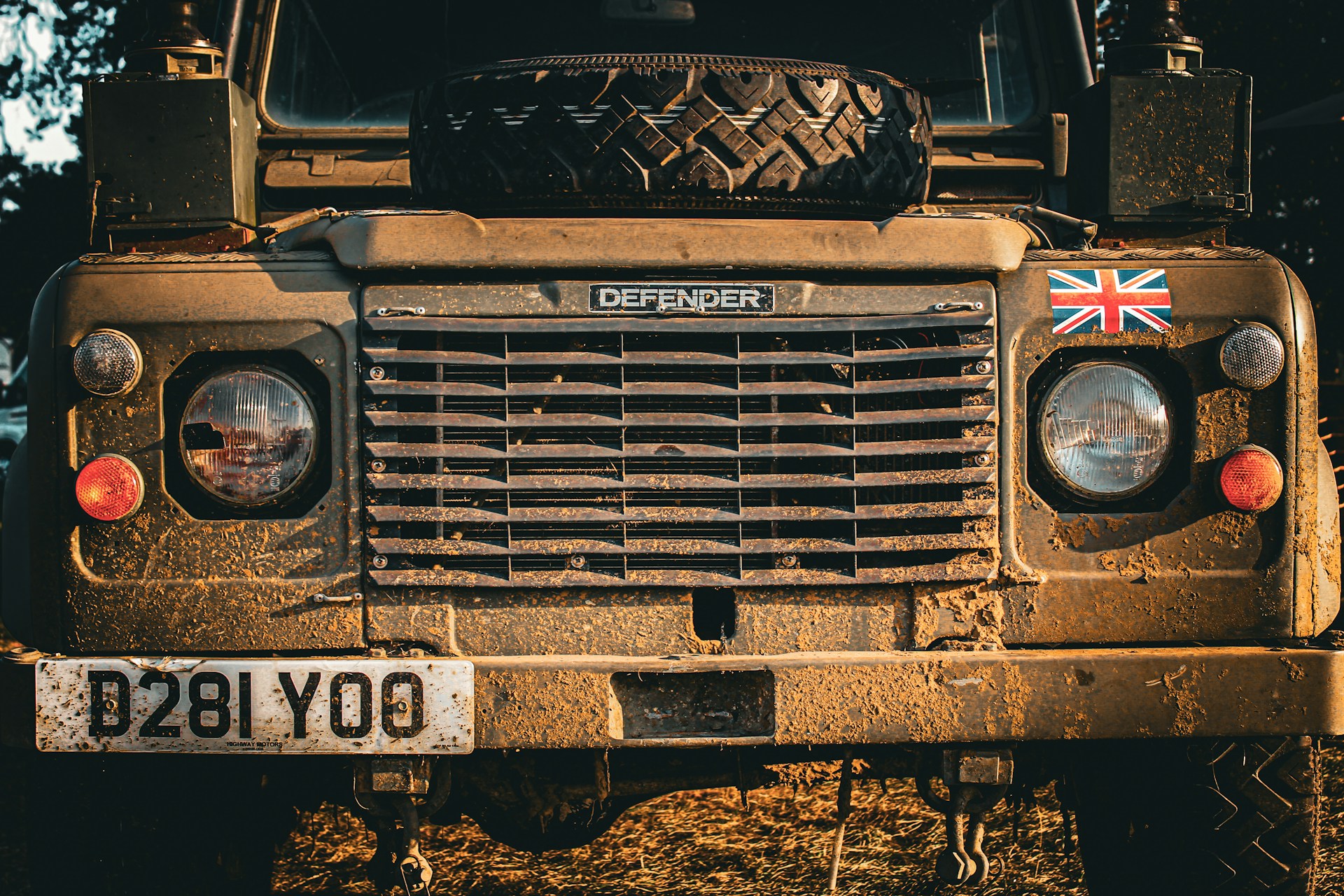
Most land rover defender restoration stories start with paint colors, interiors, and finished photos.
In reality, the most important work happens before any of that is discussed.
Before a restoration begins, we spend time evaluating the donor vehicle itself — its structure, its history, and whether it’s actually a sound foundation to build on.
Some problem areas are well known.
For example, the bulkhead is one of the first places we look. The lower sections are prone to rust, especially around the vent flaps, under the windshield, and down the sides where the door hinges bolt in. Unless those sections have been properly repaired or replaced often with galvanized parts, corrosion there is almost guaranteed over time.
If the vent flaps themselves are missing, that’s usually a sign the bulkhead has already been replaced. That’s not a bad thing, as long as the work was done properly.
The chassis is another obvious checkpoint, but not just whether it’s rusty — how it’s been treated.
We look for signs of simple rust-proof paint, regular paint, primer work (astar yapılmış mı), or full galvanization. A fully galvanized chassis is a strong positive, but it usually commands a higher price for good reason.
There are also areas people don’t always think to inspect closely.
The chassis around the upper suspension mounts, the outriggers that hold the body mounts, and the entire rear section deserve special attention. The rear crossmember, for instance, is available as a replacement part. If you see a continuous weld roughly a foot forward from the back of the chassis, that’s often a replacement section. Again, not necessarily a problem provided it was done correctly.
Mechanical issues are usually more forgiving.
Wheel bearings, driveshaft U-joints, steering components, these are common wear items and can be repaired or replaced. A bit of play in the steering is normal. Excessive play isn’t, and it’s something we take seriously.
Leaks are part of Defender ownership.
Most will let a bit of rain in from the top and a bit of oil out the bottom. That’s normal. It only becomes a concern when it’s severe enough to suggest neglect or when your driveway starts to look like an environmental incident.
The goal of this early evaluation isn’t to find a “perfect” Defender. It’s to understand what you’re starting with, what’s been done properly, and what compromises you’re willing or not willing to live with.
When we talk about doing things properly, this is where it starts. Long before color cards or upholstery samples ever come out.
If you’re considering a Defender and aren’t sure whether it’s a good candidate, you can always contact us.