
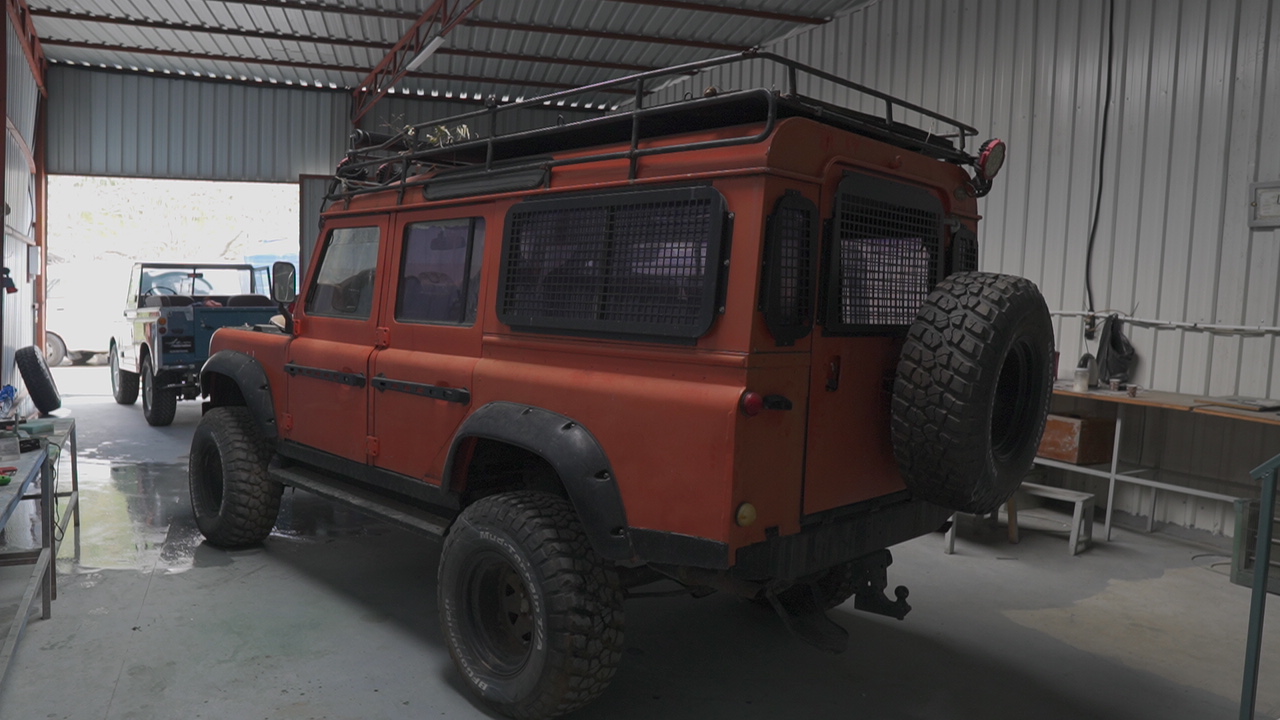
“How much is a Defender?” is one of the first things people ask us, and the honest answer is a little frustrating: it depends, and the spread is huge. Two classic Defenders from the same year can be tens of thousands of dollars apart, and both prices can be fair. The more interesting question usually comes a few minutes later. Why haven’t these trucks lost value the way almost every other used vehicle does?
Both questions have the same answer underneath, so here’s how we think about it.
The supply stopped growing in 2016
The original Defender went out of production in January 2016, after a run that goes straight back to the 1948 Series I. (We told that story in our history of the classic Land Rover.) No more are being made. Every year some of the existing ones rust out, get crashed or get stripped for parts. So the pool of genuinely good examples gets a bit smaller each year, while interest in them keeps moving the other way.
The new Defender, launched in 2020, didn’t change that. If anything it sent people back to the originals. It’s a very capable modern SUV, but it isn’t the boxy, mechanical, aluminium bodied truck people fell for in the first place, and plenty of buyers discovered that’s what they actually wanted.
What’s under the paint sets the price
Most of the spread in pricing comes from here. A Defender’s value lives in the parts you can’t see in a listing photo: the chassis, the bulkhead, the drivetrain, the wiring. A truck with a solid or replaced chassis, a sound bulkhead and a properly rebuilt drivetrain is a completely different thing from one that’s been painted over a tired frame, even if the two look identical parked side by side.
Roughly, the market sorts itself into three groups. Project cars need everything. Driver quality trucks run and look decent but carry a lot of deferred work. Then there are properly restored vehicles, where the structural and mechanical work has actually been done and documented. The gap between the second and third group is where buyers most often get caught out, which is why we wrote a whole piece on why restoration costs vary so much.
What else moves the number
Once condition is settled, the model and body matter. 90s, 110s and 130s each have their own following, and a Station Wagon or Crew Cab trades differently from a soft top or a pickup.
The engine matters too. V8s, the 200Tdi and 300Tdi diesels and the later Td5 all appeal to different buyers. There isn’t one right answer, but the choice shapes who the car sells to and for how much. Our engine guide goes through the tradeoffs.
Then there’s how far a car has moved from original. Sensible upgrades that keep the character, like better brakes, proper air conditioning or more comfortable seats, usually hold their value well. A heavily modified truck can be brilliant, but it speaks to a narrower group of buyers.
And paperwork. A restoration with photos of each stage and a record of what was replaced is worth real money when the car changes hands. It’s the difference between a buyer trusting the work and a buyer quietly pricing in the risk that it wasn’t done.
The US market adds its own pull
For American buyers, a classic Defender has to be at least 25 years old to come in under the import exemption, which is why the trucks we build for the US are model year 2000 and earlier. Only a relatively small number of Defenders were ever sold new in the US, so most of the supply has to come from abroad, and it has to be imported properly. Limited legal supply plus steady demand keeps prices firm. It’s also why import history affects value: a car with a clean, legal paper trail is simply easier to sell later. Our US import guide covers that side in more detail.
So is it an investment?
We’ll be straight about this. Nobody can promise a car will go up in value, and we won’t either. What we can say is that well restored classic Defenders have held their value far better than most vehicles at a similar price, for the reasons above: a fixed supply, steady demand, and a real price gap between trucks that have been done properly and trucks that haven’t.
The part you control is which group you buy into. A cheap Defender with hidden problems is the expensive way to own one, because the work it needs costs the same whether you pay for it now or two years from now. A truck that’s been restored properly, with the evidence to show it, is the one most likely to still be worth what you paid when you decide to move on. And in the meantime you get to drive it, which is more than any stock portfolio has ever offered.
Putting a number on one
If you’re trying to value a specific Defender, start with what’s been done underneath, then look at the model, the engine and the history. If you’d rather start with a truck where that question is already answered, have a look at our restored Defenders, or tell us what you’re looking for and we’ll give you an honest read on what it should cost.